

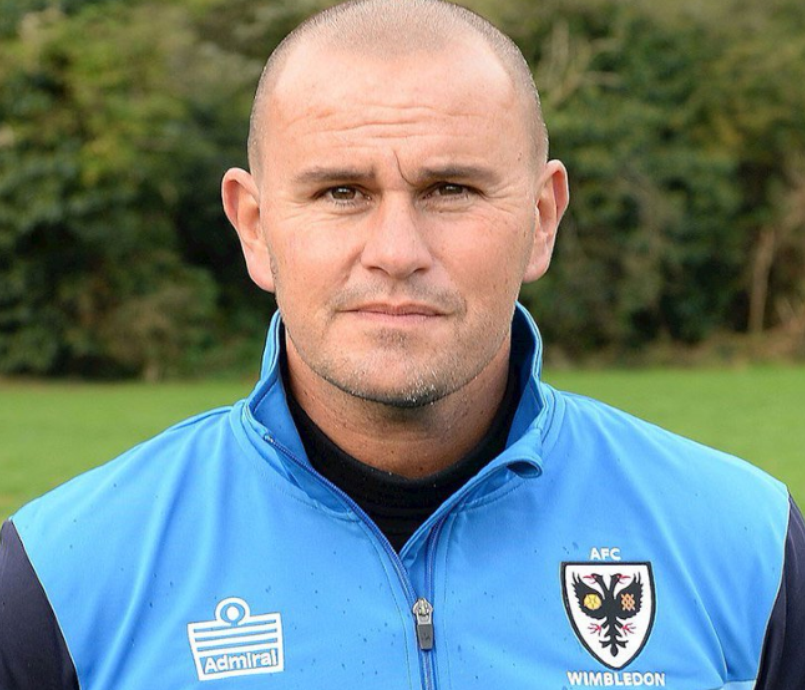


 FOOTBALL director CRAIG COPE sat down with Wombles Downunder for this ‘heart and sleeve’ interview. He talks among other things of the extensive planning that went into this summer’s recruitment, his contingency if Johnnie Jackson leaves, the Academy, his best piece of business and his cherished ‘unfinished’ project at the club.
(i) How much preparation do you put ahead of the transfer windows and can give us an insight what you and your team on analysts and scouts do ahead of decision time?
Cope: A transfer window can be anything up to a year-18 months ahead. We start by looking at contracts and see where gaps are going to open within the squad. We start very early on players. Ali Smith was a long-term target, we couldn’t quite get him when we wanted. Things are quite fluid, things are moving all the time so the work we put in prior to the window with the analytics and scouts enable us to make decisions quicker. Andy Thorn and I have watched the targets that the scouts have put forward, both through scouting and the data we use and put together to gather a picture of as many players as we can without us having to physically watch them so we can rule a player in or out to be observed by myself or Thorny before we even get to that stage. If we miss out on our list of three players and an agent or a contact will recommend say Player D, I can type Player D into my database and it will give us a picture of him, what he is on the ball, how he is off the ball, how well is he technically suited to the way we want to play, the general output within seconds if that player is going to suit us. I can then type into our scouting database which has about 8,500 reports we’ve gathered over time — we have probably three or four reports on each player. It’s rare that we don’t have a report on a player that’s in our realm of being able to sign. So we’ve then got the data and the scouting married up to enable me and Thorny to go and have a proper look at that player for one or two full games to see what he’s like, what his attitude’s like and when we’re happy with our recommendation I need to bring Johnnie Jackson into the process and get buy in from him. We do a character assessment so we have proper people who come in here. When it comes to the stage where we want to meet them and do something I have gone over numbers with their agents before so we know we are in the ballpark. We have to be disciplined with what we do, we have to look for that under-appreciated talent.
(ii) How do you assess the outcomes of the last summer transfer window and the thoughts of what you wanted to achieve?
Cope: As of right now I’m really pleased with the window. In truth I won’t know how the window has gone until the end of this season. The objectives were four-fold. We did a lot of work over the summer. Johnnie and I sat down and asked ourselves what do we need to achieve and how do we achieve it? We needed to go back to keeping clean sheets, being hard to beat and we didn’t score enough goals. There were a few players like Jake Reeves, Joe Lewis, Omar Bugiel coming to the end of their time at Wimbledon so we needed a fresh change to the leadership group to bolster the one we already had in place—Ryan Johnson, Ali Smith and Isaac Ogundere — bring in new faces like Dan Sweeney, Harry Cornick and Jayden Stockley to freshen up that leadership group. And then we needed to create more variety in our attack. We swapped Omar for Jayden, swapped Antwoine Hackford for Donnell McNeilly. We looked for more variety. I wanted to give the manager an option for each game and that can also withstand injuries. The loan market is something I use historically well. I didn’t use it too well last season, James Tilley and Nathan Asiimwe did well but I felt if we were going to step up a level we were going to need players of a higher quality within our budget. If we are going to be taking first loans we’ve got to be damn sure that they fit in with our dressing room. We did a lot of work on Ollie Harrison and Freddie Simmonds, we met their families and their agents, we did a lot of character work, we asked around and we are really pleased that we can give them a platform to kick start their senior careers. The other loans— Joe Bursik, Dujuan Richards, McNeilly — have had senior experience.
(iii) How do you manage the balance between recruiting players that can deliver what we need now versus players that are untested but should hopefully offer future resale value?
Cope: Whichever way you go you’ll get criticized. I inherited a squad that was built for total resale—there were three senior players and the rest were really young, so the scales were tipped one way. This made an enormous amount of money for the club in terms of player sales but ultimately we almost had back-to-back relegations into non-league, which would have been catastrophic. Prior to that period though, the scales were tipped too far the other way and the club had too many seasoned pro’s and not enough assets which meant the club was staying in League One but not evolving. So everything is about balance, we need to balance bringing in the right exciting younger players and the right seasoned pro’s. I believe the assets will be of higher value in a successful team playing with better players. For example Ogs has kicked on really well and developed a lot more playing next to Joe Lewis, Dan Sweeney and Ryan Johnson in the past few years rather than playing with other young centre-halves. We needed to get three or four really talented players rather than seven or eight to keep us in League One. You have a here and now squad and you put your money on these ones to try and make it. We sold Junior Nkeng, we really would have liked to have kept him but it was a good deal. We feel Zack Nelson is really high potential and we still have a lot of faith in Aron Sasu, while Ogs is still young enough to get a move. And we’ve got an option on buying Donnell McNeilly. We feel if we can get these young players minutes and in a successful team then their value will obviously be higher and their improvement should be higher, they’re playing and training with senior pros. The environment players are coming into is also key to that, its not just about selecting the right players, its creating the right base for them to fulfil their potential.
So if I can find a balance then that’s the biggest challenge in the job and educate people that the reason we’ve got four assets in the squad and not eight is because we are trying to stay in League One and make ourselves attractive to investors on the lowest/second-lowest budget in the league. That’s part of the fun, though.

(iv) How do you assess the pathway from the Academy to the first team over the last few years. Would you hope to have more players step up. Are there things being done to make that pathway easier or smoother?
Cope: This I believe is an education piece, this is a really good question. This is a question I get asked about a lot. Optically, it looks like not many players are coming through, so we have to ask ourselves why that is happening? I would say it’s harder now for players to get a debut at AFC Wimbledon than it was five years ago, because we’re doing well and there’s a structure and players need to work harder to get into that realm of being in the first team. Most clubs have Under-21s, we’re missing out on that section. We’re operating a “mini” development squad where players go out on loan in lower leagues and get senior minutes — that’s our Under-21 program. We see these players doing well at Under-18s level and if they’re good enough they’ll go straight up. Look at Junior Nkeng. But not everyone has the same pathway and there is more than one way to make it. So if players are doing well at Under-18 level they need that senior exposure to get up with us, then brilliant, but if they can’t, they need to go out on loan and develop through time. The second part is that a lot of our better Academy players get sold before they get to the 18s age group so that market for under-16 players is a really important one for us and has driven a lot of our football fortune. So as much as we would like to see them play in our first team when there’s that level of finance on the table and in the end the player unfortunately wants to go and play for a Premier League club then we have to make the best decision for this football club and try to get the best deal possible. I would have liked to see Kai Jennings play in the first team this year, I’m disappointed he’s gone out on loan to Crawley but we had discussions with him and his agent and I have to protect the asset and in the end I felt this was the best decision for the club.
(v) Do you see that as a net positive or a net negative given the Academy players never get a chance to reach our first team?
Cope: I would like to see more Academy youngsters coming through, of course, I do, but you look at it as a business. If you’ve got an asset that’s worth half a million pounds at 16, for us to get that amount for somebody at 22 then he’s got to get into the first team, he’s got to score 10 goals in his first season, so it’s a big risk for me to say to the Board please don’t take that money, let the fans see him come into the first team. The percentage chance of that player being worth the same value at 22 is quite low. Also we have to box clever within the academy rules, a player can leave before his scholarship for compensation which is generally a set amount, so if you don’t negotiate a better deal before tribunal then we could lose out on both fronts. So I wouldn’t be doing my job on the financial model we’re currently operating under if say we turn down that half a million pounds for him to walk out for less at tribunal or mature him for five years in the hope that he’s the one that goes for a million. We have to take the emotion out of it, but I’m a football fan, I want to see players from the Academy come into the first team.
(vi) Talking of the Academy do you have a desire to have a continuity of football style throughout the club to back up the work of Johnnie Jackson?
Cope: No, I’m not overly concerned about that. I see us as a different football club. We give everyone an opportunity, we operate differently and we operate in the manner which is right and fair. I want to see our 18s play with similar attributes to our first team, but what shape and style they play, as long as there’s attributes to marry up with the first team then I’m not overly concerned because realistically we’re going to take three players a year, and that means there’s up to eight players a year not making it so of those eight players I want them to have a playing career outside. I want to create all-round footballers, they will have to experience a load of different managers and a load of different styles of play and I want to better prepare them for that so that people from Wimbledon leave our academy in the best position for them to succeed beyond Wimbledon.
 (vii) It’s been clear that the team is very reliant on Jayden Stockley as a target man. How do you manage that reliance with recruitment. Do you ideally want to have a like-for-like alternative and with Matty Stevens injured at the moment, do you think there is anyone in the squad who can play that target man role?
Cope: I mentioned earlier on about that variety in attack because Jayden is performing well at the minute so that’s why we’re playing with him. If Jayden was to have a dip in form or get injured we would have to change our attack, which is something we have tried to adapt with our recruitment. We ultimately can’t afford two Jayden Stockley’s either. So we have to be adaptable so for argument’s sake if Jayden were to get injured or there’s a dip in form we should have Marcus Browne back from injury, Harry Cornick back, Donnell McNeilly, Whisper (Richards), Matty Stevens, so we’ve now got a bit of variety, I think we’ve been quite restrictive in the past, so, no, there’s no one like Jayden Stockley in the squad but the squad has not been built for that. We need to adapt for opposition also, teams who struggle with crosses Jayden will be key for, teams that keep a high line, Donell and Cornick will be key for, teams that struggle in pockets, Browne will be key for. So, while those players are playing well we’ll milk them for every ounce we can get, try to keep him on the pitch.

(viii) Johnnie Jackson is the eighth longest-serving (now seventh longest-serving) league manager. Do you have a contingency plan in place in case he leaves?
Cope: Yes. I wouldn’t be doing my job if I didn’t have a short or long term solution if Johnnie was to leave tomorrow. We have got contingencies in place if that was to happen so we can act quickly in the short term. Obviously, we’re really pleased he’s lasted here that long and long may that continue to have that continuity. Being a low-budget club continuity and stability is our friend. I believe it is a key reason we have overachieved so drastically in a short space of time.
(ix) In relation to that question. If it does happen and Johnnie does go, is it your personal preference to approach a target or targets or just make it a more formal process with all-comers to apply?
Cope: I would treat it like I recruit players. Processes in places. There are people on a list who I would like to approach if they were out of work. Obviously, we’ll have a short term solution put in place first and foremost to give us time to process. There are managers and coaches like players that we think might not be available that do become available. For instance, Wimbledon tried to sign Jayden Stockley two years ago, but we can sign now and there are managers that can move now.
But like players their attributes have to fit, they’ve got to buy into the football club. We have worked really hard to set this football club up to have a base to be able to perform so that a manager or coach will have to come in and work with us, it won’t be the other way around.
(x) Much of your work involves dealing with agents. How do you find that?
Cope: There are some very very good agents out there, there are also some bad ones. You get some that are just starting out that can come across a bit differently, and they probably don’t handle the situations where they could. They think they’ve got to shout for the player, and they’ve got to come across as passive aggressive, and sometimes actually overly aggressive, but that’s few and far between now. You know, FIFA are trying to regulate it a lot better. There’s a lot of proper agents out there who stand up and do really well for their clients and do really well for you the club. But I’ve dealt with all sorts of agents, and yeah, there’s some that I’d love to avoid, but I can’t. It’s hard for agents because if you’re an agent of a talented young player, you have a lot of noise around you from the player, the family and they’re employing you to work for them. But they also know that if they don’t keep their player happy they’ll move onto the next agent. So I do sympathise with them, they get a bad rap but in the main they are really good to deal with and it’s an incredibly tough job.

(xi) Who do you regard as your best piece of business-wise in your time at Wimbledon since you since you came in in 2023?
Cope: It’s a really easy one for me now. It’s probably developed over three years. I wouldn’t have said it in year one. I probably wouldn’t have said it in year two. But looking back now, Ryan Johnson. I’d done a lot of research on him before bringing him to this football club. I looked into his background. I looked into what sort of teams he’d been involved with where they finished in the league, It was probably him and Jake Reeves that turned the club around in that summer in ‘23 where we sort of had to change the team room, change the squad, and he and Jake Reeves were instrumental in building the change room to what it is now. You see how players react with Johnno, how they respect him and you understand by his modern leadership approach how crucial he has been to the club.
(xii) For those who are very appreciative of what you do for the club, what is your contract status, and do you want to stay on and finish your work here?
Cope: My contract status is that I’m employed, and I absolutely love it, and I want to stay here for as long as possible. I’m very keen. I don’t want to outstay my welcome. I do think about that a lot. But if I’m speaking really honest and being candid with you and I think you can see me that I’m quite a heart and sleeve type.
I love it here. I genuinely love it here. I think this club suits me and I suit this football club. I would love to see this job through and doing my bit for the football club, which is trying to get them back in the Championship.
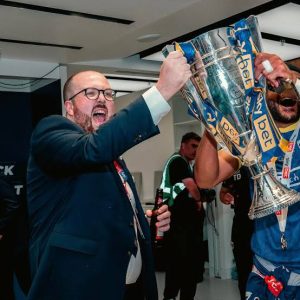
If I can be the director of football and Wimbledon take their league position back… you’ve done Plough Lane without me, you’ve got back into the league without me. Wembley was amazing … but if we can do that one (Championship), I’d be a very happy man.
(xiii) So, following on from that, what do you see as your major unfinished business or project at the club?
Cope: It’s a long way off. But if I could write my own history, I would like to take our league position back with me as director of football. Don’t ask me how we’re going to do that. A lot of little things have got to kind of fall into place with. You’ve got to have a bit more support financially. We don’t need a stupid amount but we do need to get closer to the pack. There are some real case studies out there of teams who are real working examples of that. Lincoln last season have built over a number of years, sensibly and disciplined like ourselves. Stevenage and Orient have been in the play-offs within the last two seasons.
So I’m not saying we’re going to be like pushing for the play-offs, but if you build something consistent every few years and drip feed investment in, there’s no reason why if we stay disciplined and structured in our approach that we could have one season in three of challenging for something. But we do need more investment.
We do need to improve the infrastructure. We need to improve year on year, which is one of our values.
(xiv) You’re one of the youngest football directors in the league. How do you get on with other football directors at clubs? Do you get on them like you interact with them, or do they kind of protect their patch, or as it as it go?
Cope: All people are different. Like we’re in a people industry, so I think I’m quite personable. But then other people are quite guarded. So it depends on personality. It’s the same as in every industry, isn’t it? If there’s people who are humble and want to have a conversation with you. You’ll open up and have a conversation with them. If there’s people who want to be guarded, then that’s professional. That’s fine, I just want to enjoy my time and be successful in my career. So, the biggest thing is that everyone’s got to enjoy what they’re doing. We’re very fortunate to do the job we’re doing and the lifestyle we have, so we have to enjoy it as well as have to enjoy the company.

(xv) Do you have a mentor as such in that kind of field. Anyone that you call up on your much-used phone?
Cope: I’ve got a few people I can call and ask for advice. I’ve got a few people that I’d love to sit down and have a chat with. I should probably do that more. So sometimes I might just go and say, right, guys, you’ve seen this before how would you play it out? I haven’t got a single mentor, but I’ve got some really big names who have done my job, who have managed at Premier League level, who have managed at Championship level, that I can pick the phone up to fairly easy and go, what do I need to do? Calm me down occasionally when I need it. And if I’m being honest, our chairman Mick Buckley has done really well with me, he’s obviously my line manager but he’s often coached me and being young in this high pressured, public role, it has been invaluable for me.
[The Craig Cope Interview was first published in the October-November 2026 issue of the Wombles Downunder fanzine. Details on how you can subscribe to Wombles Downunder and enjoy quality reading.]