IT was a seminal gathering of Dons’ elders at the 50th reunion of the Batsford Boys’ storied 1974/75 FA Cup run. RAY ARMFIELD was one of many who helped pull it all together and tells the tale of how a cult hero made an emotional appearance and got the biggest queue on the night for selfies and autographs.
It was the culmination of months of planning, hard work and co-operation by so many good people across AFC Wimbledon’s Commercial and Media teams, Wimbledon in Sporting History (WiSH) and Wimbledon Old Players Association (WOPA) that led to 11 former ‘Batsford Boys’ from Wimbledon’s iconic 1974/75 FA Cup run squad joined by over 160 fans for dinner and an evening of nostalgia on Friday 31 January.
The Batsford Boys—those club legends of non-league Wimbledon who defied the odds at Elland Road by taking the mighty Leeds United to a FA Cup replay in 1975 only to go out 1-0 to a Dave Bassett own goal before 45,000 at Selhurst Park. There they were on stage at Plough Lane receiving their deserved accolades from Dons supporters.
Dickie Guy
As I began to realise and commented on social media when the day drew near, “In hindsight, helping to reopen a museum, getting a squad of men aged between 70-80 years of age in the same room at the same time and arranging the special guest for an AFC Wimbledon home game in the same 24 hour window isn’t something I’d recommend for anyone’s stress levels” but it all turned out alright on the night – and indeed on the pitch the following day.
The Batsford Boys at the reunion
Amazingly perhaps for a generation that wasn’t brought up with smart phones and electronic means of communication, the Allen Batsford side was truly a remarkable band of brothers who stayed in touch, with even their wives retaining strong bonds with each other over half a century.
So for someone like me, barely a teenager when this epic season unfolded, to get to know my boyhood heroes as friends in many cases was wonderfully surreal.
Dave Bassett – GETTY IMAGES
Dave Bassett is the most high-profile of the team, given his subsequent managerial exploits, so to realise he had my number in his phone when I rang him a few times took some getting used to. Always answering my calls with a “Hello Ray, how’s it going son?” I mean, I’m 63 next month and no-one has called me that in a while, but ‘Harry’ is 80 so I always inwardly smile.
When we fixed a date for the reunion, quite a few were on-board immediately. There were a few that took some work and one of almost Holy Grail proportions – more of that later. In the end, a prior family engagement in Ireland meant Keiron Somers was unable to attend, an illness put Mick Mahon on the sidelines and despite our best efforts, none of us could find Dave Lucas.
But cult hero Roger Connell was the one I wanted. Invited, but not attending a couple of previous gatherings, I was told “He won’t come, you’ll never get him.” But as the Canadian Mounties used to say when tracking people “We always get our man” I found a number for Roger and rang it. He answered and we had a quick chat.
Roger sounded interested. We swapped a few messages and then his daughter Enya became involved. Roger had just undergone major spinal surgery and getting him across London wasn’t going to be easy.
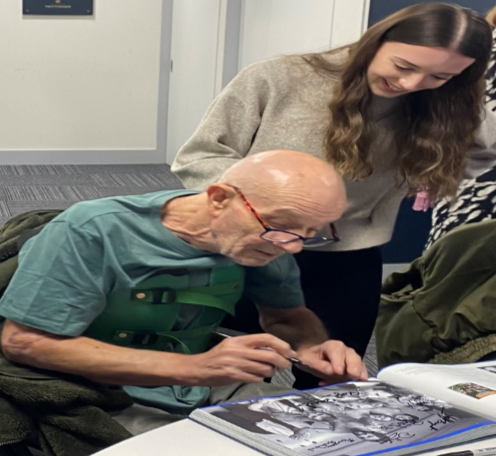
ENYA told me ROGER was always quiet and humble about his playing career – even to her – and I’m not sure she understood when I explained how much it would mean to us all to see him back at Plough Lane. I wrote to him for an autograph once and got back his signature with “It was the best time of my life”.
We formulated a plan but even on the day, even until I had my “Elvis is in the building” moment, when Enya pushed her father into the stadium in a wheelchair, did I actually think we could pull it off.
Roger Connell signing a book watched on by daughter Enya
Roger got the biggest cheer of the night when the squad were introduced one by one. In addition to the Leeds highlights, we all sat and watched the Middlesbrough FA Cup games from 1977, which most hadn’t seen before. Roger was front and centre on and off the pitch, with a disallowed goal and an eloquent post-game interview, rebutting Jack Charlton’s disparaging claims about our style of play and the pitch. And at the end, the biggest queue to get selfies and autographs was for Roger. It was very emotional.
Afterwards, the ‘thank you’ messages from the players also pulled at the heartstrings. It was poignant to contemplate that this may be the final time we get them all back as a group, but the evening did them and those of us that facilitated it justice.
The Club Museum
The museum itself has been a real labour of love for many of the same volunteers that helped with the Batsford Dinner. Its been a long road since the flood in September, but if there has been one positive to emerge from that, it’s been that our ability to showcase the treasures of this unique club have seen us bounce back better, brighter and bolder than before.
Twenty new themed and sponsored cabinets – each dedicated to a moment within our timeline from 1889 – plus new flooring have made what we can now offer, the envy of many clubs considerably higher up the food chain. I can’t describe it or really give you an experience with a few photos, so check out a few videos online and of course, if you are able, come and see it for yourselves one day.
And, of course, the weekend was topped off nicely with a big three points against a Bradford City side on a run of straight victories and very much in the promotion hunt with us.
Ian Cooke
IAN COOKE writes: THE ‘Batsford Boys’ event was a great success, well attended by fans and with old players in attendance: Dickie Guy, Paul Priddy, Billy Edwards, Bob Stockley, Jeff Bryant, Dave Bassett, Selwyn Rice, Glenn Aitken, Graham Smith, Roger Connell and myself. It was also very nice to have Maureen Batsford and Gloria Donaldson there representing their late husbands and they both enjoyed themselves. Also in the gathering was Mick Kelly the goalkeeper who was at the club when I joined Wimbledon in 1963 when he was also the goalkeeper for England Amateurs before being transferred to Queens Park Rangers. Mick ended up as goalkeeping coach with the full England squad for many years. Unfortunately, Kieron Somers had to cry off as he was required at a family gathering in Dublin which he only found out about two weeks beforehand. Mick Mahon was also unable to attend as he went down with a bug a couple of days earlier. The atmosphere was truly wonderful — we were all individually welcomed into the hall with applause and cheers from the gathered throng of supporters [plus a good number of our family members also there]. A great deal of hard work had been done by John Lynch and Ray Armfield [assisted by wife Sharon] over many preceding months, while
Dons panel [left to right] Ivor Heller, Dickie Guy, Dave Bassett, Ian CookeIvor Heller was the ideal compere, keeping things moving along with just the right blend of humour, facts and statistics…..plus his usual ‘mickey-taking’. Ivor conducted interviews on stage with three ex-players seated with him for each ‘session’ and again there was a lot of laughter when each of us recalled some funny incidents or specific events like when Billy Bremner fouled Selwyn Rice, who needed stitches to a leg wound but who subsequently told reporters on the train home that he was ‘going to get him in the replay’ [which he missed because he hadn’t recovered] but the comment was read by someone at the FA leading to Selwyn getting a three-match suspension for bringing the game into disrepute, whilst Bremner, the perpetrator of the violence, got off ‘scot free’! It was a truly enjoyable evening and afterwards we mingled with many supporters who were at those games 50 years ago, had their own ‘take’ on what happened, and had obviously watched Wimbledon/AFC Wimbledon for a very long time. Most of the boys stayed over and came to see the Bradford game the following day and they were still ‘buzzing’ after everything that went on the previous evening. From what I saw and heard I would say that everyone had a good time so, as I say, a great success for the club.
[The Batsford Boys Reunion was first published in the February-March 2025 issue of the Wombles Downunder fanzine. Details on how you can subscribe to Wombles Downunder.]
GARY ELKINS played 100 games for Wimbledon in the 1990s. In this WDSA interview he shares with us his memories, his best and worst manager, the Crazy Gang, Joe Kinnear, his MoM marking of Dennis Wise and even a mention of working with Boris Becker inside prison.
i) Let’s start with your move from Fulham to Wimbledon in 1990. You were close to joining Brentford and subsequently you were reunited with your former Fulham manager Ray Harford at Plough Lane. Give us your reasons for leaving Fulham and joining the Dons? How much a pull was Harford for you to go to Wimbledon?
Ray Harford .. “the best coach I played for” ..
Gary: I was due to sign for Brentford but a former player/coach at Fulham (Terry Bullivant) told their chairman that I had “shifty eyes” … Steve Perryman resigned from the manager’s role as the chairman took Bullivant’s advice on me and not his. I have no idea why he said such a thing… Maybe we will cross paths in the future and I can have a little chat to him ! Ray Harford was the best coach I played for at Fulham and Wimbledon, he went on to win the Premier League at Blackburn with Kenny Dalglish.
(ii) Your Dons debut on November 17 that year was against Chelsea at Plough Lane and apart from winning 2-1 your marking of former Dons favourite Dennis Wise was a highlight. Wise had just moved from Wimbledon to Chelsea for a then-club record fee of £1.6 million, while you arrived from the Cottagers for a nominal fee of £25,000. Tell us about your memories of that game and the plaudits you received.
“I was up against Dennis Wise. I got man of the match and it was all over the papers as you say about making a mockery of the transfer system.” GETTY IMAGES
Gary: My debut was against Chelsea and as you said I was up against Dennis Wise, etc. I got man of the match and it was all over the papers as you say about making a mockery of the transfer system. I sent the papers to Diadora and got a boot/clothing deal out of it!! I also got a mention in Dennis’s book. The game as I remember was brilliant at a very passionate Plough Lane.
(iii) Wimbledon finished seventh that season but Harford left for Blackburn Rovers 12 league games into the 1991-92 season and Sam Hammam controversially appointed Peter Withe as his replacement. It proved a disastrous decision and Withe lasted just 104 days before Joe Kinnear/Terry Burton came in and saved the Dons from relegation. Can you reflect on those times, Losing Harford, Withe and his ‘rapport’ with the players and the galvanising effect of Kinnear? What about that match up in Merseyside under Kinnear and the pre-match preparation?
“Joe Kinnear asked us what did we do the previous night… Nothing gaffer… Then Joe pulled out the receipt from the bar bill and said f**king liars.” GETTY IMAGES
Gary: I think losing Ray was a massive blow. As I said previously, he was the best coach I played under. Peter Withe came in and tried to change things both on and off the pitch. He had a ‘no jeans or tracksuits’ policy. You had to come to training in trousers, dressed smart casual. They were rules that would never work with Wimbledon (Vinnie/Fash) etc… Joe and Terry took over from Withe and lifted the spirits around the club, Terry, equally, was a great coach. The bar bill story went like this ….. We played Everton on the Wednesday night and won, we went out for a few beers, We were playing Man Utd on the following Sat and we went out for a beer or two on the Thursday (that was not allowed). On the Friday before training we were on the bus and Joe asked us what did we do the previous night… Nothing gaffer… Then Joe pulled out the receipt from the bar bill and said f**king liars.. We went on to beat Man Utd and when Vinny came into the dressing room after the game and loudly declared: Where we going next Thursday boys?” The Gaffer went mad..
(iv) You played with some great Wimbledon players in your time…. Give us some of your reflections on a few of them: Robbie Earle, Vinnie Jones, John Fashanu and Oyvind Leonhardsen?
“Vinnie was as you see him, loud and upfront, winding people up training and in games.”
Gary: Robbie, Leo were very fit and very professional. Mick Harford was a great bloke, he was always helping players. He was very hard but fair. Vinnie was as you see him, loud and upfront, winding people up training and in games. I’m not sure if many got on with Fash. He had his own unique way…We had some great players who went on to big money moves and enjoyed great careers.
(v) After playing 100 games for Wimbledon you left for Swindon Town in 1996. What were the circumstances of your departure?
Gary: I went to Swindon to play first team football, it was a mistake. Steve McMahon was the worst manager I have ever played for/seen. He was a bully and thought he was god. I’ve not heard any good things about him from players that played with and worked with him.
(vi) You retired after just one season at Swindon Town and you said at the time that you found it very hard adjusting post-football. You had been playing 16-17 years since leaving school. You were quoted as saying that when you walked away from football you had no qualifications for a job. So how did your role as a PE instructor inside Huntercombe prison come about?
Gary: I left Swindon and played in a couple of charity games at HMP Huntercombe, where I still work 25 years later. They were recruiting so I applied and got a job. I went to Lilleshall after my probation period to train as a PE Instructor.
(vii) Your purpose was to try and rehabilitate prisoners and help them gain qualifications in personal training. One of your most publicised successes was helping SAS: Who Dares Wins winner Moses Adeyemi when the now-personal trainer to actor celebrity Idris Elba was serving time for driving a getaway car during a robbery. Tell us about your philosophy, the personal satisfaction of the work and how you went about your PE role inside the prison?
Gary: All what you say about Adeyemi Moses is true. We teach Stoic Philosophy now, how to live a better life working on things you can control and letting go of the things you can’t.
(viii) And did you ever come across former world No.1 tennis player Boris Becker while at Huntercombe prison. The six-time Grand Slam champion was jailed there for hiding £2.5m in assets to avoid paying debts while declared a bankrupt. If so, was he helpful and how did you find him as a person?
“Boris was a great guy telling lots of stories. He knew everyone.” GETTY IMAGES
Gary: We have worked with hundreds of prisoners including Boris Becker, who was an orderly with us in the classes. In his first interview on German TV after his release he had our manual on the table in front of him. He said that was like his bible and how much it had helped him. He was a great guy telling lots of stories. He knew everyone. He was even negotiating from his cell his daughter’s fee for the German version of I’m A Celebrity!!
(ix) You also started up the first aid training provider company, SaveYu. Tell us what brought that about and what the initiative has become in the community?
Gary: My partner (Gemma) and I set up our company SaveYu. It’s first aid and mental health training for children and adults. We both experienced our children choking and we saved their lives. We go to businesses, schools, etc, and teach regulated awards that are needed in the workplace. We also teach kids in year 5 upwards (age 7 and above) Mini SaveYu, a kid’s version of first aid but covering all content and hands-on assessments that adults can do.
(x) Late last year you were a guest of AFC Wimbledon at the Walsall game at Plough Lane, You also were part of a stadium tour. Your impressions of that day, of the new stadium and what AFC Wimbledon has become after the traumatic hijack of the club to Milton Keynes. Your feelings about that as an ex-player?
Gary: Gemma and I were invited to the Walsall game.It was a fantastic day meeting up with old friends and seeing what is a fantastic stadium it is. So many passionate fans and people are involved. I’m really pleased that the fans set up AFC Wimbledon and didn’t follow MK… It should never have happened.
(xi) Finally, and for those perhaps too young (or not even born) at the time of Wimbledon’s remarkable life in the Premier League, tell us what it meant to be part of that Crazy Gang ethos, the classic unfancied underdog team? Do you still see any of your old Dons teammates?
“You can never replicate Wimbledon now, we were unique on and off the field. It was the best time ever.” GETTY IMAGES
Gary: Wimbledon as a player was brilliant. We were never really expected to win but that made us stronger as a group. It was also a fine line between us and a potential move to a BIG club. We had great relationships that still last today as we meet every Christmas for a beer or two. We have a group chat where the stick/banter still goes on … 30 members turned up at Spurs ground to celebrate Joe Kinnear’s life… A 12 hour drinking session. You can never replicate Wimbledon now, we were unique on and off the field. It was the best time ever.
[The Gary Elkins Interview was first published in the February-March 2025 issue of the Wombles Downunder fanzine. Details on how you can subscribe to Wombles Downunder.]
COLIN STONE worked in the club office in the early years of Wimbledon’s Football League life at the old Plough Lane before emigrating to New Zealand. In this WDSA interview he has some fascinating insights and amusing yarns of the times back then and the Dons link with Napier City Rovers in New Zealand.
i) So how did you get your start working for Wimbledon Football Club? What were the working conditions like at Plough Lane back in those days, any particular memories of that time stand out for you?
Colin Stone
Colin: It was 1979. I was part of the management team at Wimbledon Stadium. I worked on a greyhound racing night. We often had sponsored or benefit nights and one of my roles was sponsor hosting. One evening we had a benefit night for former Arsenal manager George Graham and I think the hospitality manager for the Dons must have been one of the guests. He saw me ‘in action’ and that week I got a phone call to come and meet Ron Noades. I had been a Wimbledon supporter for most of my life. My dad used to take me to their games as a kid, and at the time I was a season ticket holder, so the opportunity to join WFC was massive. I met Ron and he offered me the job of Promotions Executive for Golddigger Promotions, WFC’s promotions company. I think I must have accepted the offer on the spot!
(ii) It was a time when the Dons had entered the Football League for the first time under chairman Ron Noades. What was it like working for him and with the wonderful Eric Willcocks in the commercial side of things? Any special memories of Eric, who was a guiding light in getting WDSA started back in 1985? Did you ever come across Sam Hammam back then?
Eric Willcocks … Mr Wimbledon
Colin: Yep, memories of them all to a greater or lesser extent. Everyone was a little scared of Ron. When we saw his Jaguar pull up in the car park at Plough Lane, the level of tension rose in the office. I recall when Ron was buying Crystal Palace it created an even higher level of tension! I can remember him being downstairs in the main office, his feet up on the table, talking to someone on the phone, making sure we could all hear that he was buying Palace. Once the ‘split’ began tensions became acute and I can recall there was uncertainty amongst the staff about who would go with him to Selhurst Park. The hospitality manager went with him and because I was hired directly by Ron, it was thought I might go too, but I was a Dons lad through and through. That said, Ron seemed to like me and I remember the Jag pulling into the car park, everyone on tenterhooks as Ron flew in and proceeded to identify furniture that was his. “That’s my desk, that’s my cabinet’ etc. Everyone put their heads down. Ron got to my desk, stopped and said, ‘Hi Colin, how are you?’ then flew upstairs to continue his manic furniture identification process. Eric was Mr Wimbledon. He was a lovely guy but could get fired up when things went wrong or he became frustrated. I got to know him and his lovely wife, Ruth, pretty well and often on a Friday evening I would join them at the adjoining Sportsman Pub in Durnsford Road. They were a lovely couple! I was already in New Zealand when I heard the sad news that Eric had passed away but I stayed in touch with Ruth for several years. I did not have much to do with Sam Hammam. He was quiet and relatively unassuming! I do remember the club director Peter Cork who was Mr. Positive, with a mantra of GBTA= Great To Be Alive!
(iii) You would have seen first-hand the work of Dario Gradi as manager replacing Allen Batsford. What was Gradi like to deal with and any of the Crazy Gang players you particularly remember from that time – any memorable tales?
Steve Galliers
Colin: My era at Plough lane was post-Allen Batsford and I didn’t really have much to do with Dario. He left for Palace soon after the split, so I had more to do with Dave Bassett. The Crazy Gang was not really a thing in those days and I think Wally Downes was only just out from being our first club apprentice, but I found out several years later from the returning Napier players, about some of Wally’s antics on away trips or when playing for the Reserves. I was 22-24 years old when at Wimbledon, the same age as some of the players, so I had a few good friendships. I used to hang around quite a lot with Steve Galliers and Dean Thomas. We’d go for runs around Wimbledon Common, play some football at the Richardson Evans raining ground, play tennis and then end up back at my house for tea and toast served by my mum. We used to have nights out together and also usually after a game. I still keep in touch with Dean and when he was playing for Fortuna Dusseldorf, my wife and I went over to Germany to see him. When at the club I also hung around with Gary Armstrong. His best mate was Paul Denny and when Paul went off to play in the USA I filled the void in Gary Armstrong’s social life!
(iv) Dave Bassett took over as manager in January 1981. What do you remember about Harry back then, what stood out, anything in particular? Bassett also made the decision to send young players Mark Morris and Paul Fishenden to play on loan in New Zealand with Napier City Rovers, and followed later by other young Dons Brian Gayle and Brian McAllister. What was the background to the Napier City Rovers connection, how did the move come about?
Dave Bassett and the Crazy Gang
Colin: Harry was just Harry. He’d come into the office every afternoon after training with a ‘afternoon, men’ and then head upstairs to his office. At one stage he was made General Manager so he was also my boss. Not the best of outcomes! The relationship between Wimbledon and Napier City Rovers began several years before Dave Bassett between Dario and Napier’s coach at the time. The first ‘Wimbledon import’ we had was Peter Brown in 1980, followed by Paul Fishenden and Mark Morris in 1981. Thanks in part to Fish and Guppy Napier got promoted to the National League for the first time, the top league in the country and a need to set themselves up on a strong commercial footing. I was a by-product of the relationship as I got talking to one of the Napier players at the end of the NZ season, who was at Wimbledon and he ‘sold me’ the idea of going to NZ. I talked with Fish and Guppy, who I also I used to hang around with a bit with and they reinforced the concept even further. From memory Brian Gayle came out to Napier with Sean Priddle in 1983, with Brian McAllister and Jonathan Gould coming out in 1989 in a year when Napier became national champions for the first time. Brian McAllister was just a class above! He ended up with a girlfriend in Napier. The two have been married for many years and they now live in Brisbane.
(v) You went to Napier in 1982. What made you decide to leave your homeland to live and work in New Zealand and what would become a long and fruitful time firstly as Commercial Manager and then the club’s General Manager?
Colin: I had two ambitions as a young man, one to be involved with professional football and the other to spend time living in New Zealand, so I was able to fulfil my dreams!
(vi) You must have many special memories of your time at Napier City Rovers and watching their matches. Which memories stand out and you even married Alyson under the goalposts at the club’s Bluewater Stadium in 2018. Tell us about that day.
Colin on his wedding day with Alison.
Colin: So many memories!! During my time at Napier we won several national titles and FA Cups (Chatham Cup) and are only one of two clubs to have done the league and cup ‘double’ twice. (1993 and 2000). Probably winning the league title for the first time in 1989 (with Jonny and Brian). We were a small, provincial club, but with massive community support and it was a joy. We partied long into the night at our clubrooms. Then winning the double in 1993. In the Chatham Cup Final it was 0-0 at half-time but in the second half we just went berserk. Final score 6-0. Yep, Alison (my second wife) and I got married under the goalposts before a first team game. When I left the club in 1998 to become CEO of Sport Hawke’s Bay, the regional sport leadership organisation, the club made me a Life Member and I also became Club President, so I am still very closely associated with the club, even though I have lived in the capital, Wellington, for almost 10 years. (I am not the President now, BTW)
(vii) Another Wimbledon connection was Shane Smeltz, who played for Rovers before he went to play in England and with AFC Wimbledon. Tell us about Smeltz’s time with the club and in the 2002 season when he was the National League top scorer with 20 goals?
Shane Smeltz in his AFC Wimbledon days
Colin: Smeltzy was a little hard to get to know. I think he was a little uncomfortable with people that he thought were ‘in authority’. He joined Napier after missing out on a professional contract with Brisbane. I think he only played one season for Napier but he was extraordinary. I later became the team manager (our terminology for the Head of Delegation) for the NZ National Team, the All Whites, where I toured with Shane, but I still didn’t really click with him.
(viii) You left Rovers to take up the CEO role at Sport Hawke’s Bay, where you spent 17 years before you subsequently took up a role as the Regional Partnerships Manager at Sport New Zealand. What work does that role entail?
Colin: Sport NZ is the government agency for Play, Active Recreation and Sport. We don’t have branch offices so we invest into National Sports Organisations, National Recreation Organisations, National Disability Organisations and Regional Sports Trusts (like Sport Hawke’s Bay) to deliver on their own strategies that align to our national outcomes. My role is to provide advice and support to those organisations, particularly the CEOs and the board chairs and to continue a performance management function.
(ix) You are good friends with Wimbledon’s FA Cup winning manager Bobby Gould. How did that all come about and do you keep in regular touch with Gouldy?
Bobby and Margery Gould
Colin: I’ve said that in 1989 we bought Jonathan Gould out with Brian McAllister. Bobby was the manager of Wimbledon by then and we got talking about players for our exchange program. Napier used to send their better players to Wimbledon to ‘live the life of a professional footballer for three months. Jonny totally fell in love with Hawke’s Bay and vowed he would come back. As you might recall he went on to play for Coventry City, Celtic and Scotland (in the World Cup) and one evening I got a phone call from Jonny (many years later) saying “I am coming home”. So Jonny returned to Napier. Around this time NZ Football moved to a franchise League so Hawke’s Bay United was created by NCR and became the regional team of which Napier were the original owner. Long story short, Jonny became the head coach of HB United, his dad came out periodically to help with the coaching (Busman’s holiday) and eventually Jonny brought out his Dad to be his assistant coach. I was the Chairman of HB United. Bobby and Marge Gould come out to Hawke’s Bay for four months every year and we often catch up for a BBQ and to swap stories. Bobby has reeled off many a yarn about his relationship with Sam Hammam, the things the Crazy Gang got up to, etc. and some of the ‘ intimidatory tactics’ they put in place, usually involving Fash and Vinnie, but I am unsure if I can reveal those! Although they may be in Bobby’s memoir. I know he gives a chapter to his time in NZ. I even get a mention!
(x) You recently made the trip back to England and had a tour of Plough Lane Stadium. What stood out for you that day, looking around and reflecting on what AFC Wimbledon had become? The wheel had turned on your life, over 40 years from when you working in less salubrious surroundings just down the road?
The Old Plough Lane
Colin: ‘In my day’ a good crowd at Plough Lane was around 3,500 so seeing the new facility and knowing the crowds the Dons get now is fantastic. I love the way the new stadium pays homage to its past. It’s a living museum to the people who have followed and loyally supported the club through its incredible history. I love the way the ground pays homage to the Wimbledon Stadium site re ‘Mick the Miller’ Greyhound and the Speedway references. Unfortunately, I was back before the latest league season had got underway, but I would love to be there for a really ‘big game!’ The old Plough Lane was very tatty but it was all we knew and I have many, many great memories of that ground, like sitting with Deano and Midget (Galliers) watching the ‘stiffs’ play on a cold, frosty Tuesday evening! Great stuff! Great memories.
“I’m sending you to New Zealand … you’ll love it”
Paul Fishenden
I have nothing but fond memories of my time in Napier, quiet ground-breaking at the time with three 17 year olds (Mark Morris, Terry Emms and me) going to the other side of the world to play football. I remember when Dave Bassett told us rather than asked “I’m sending you to New Zealand… you’ll love it” and upon arriving being taken to someone’s house and introduced to Roger and Simmo and being given a choice of jobs for day-time work .We pulled straws and I pulled working on a pig/chicken farm owned by the then club chairman Terry O’Neill. He was a funny wonderful man whose team made us so welcome.We were also allocated to a family to take us in for the duration of our stay. Again I couldn’t have been better looked after with Roy and Christine Stanger treating me like one of their own, an amazing couple who I’ll always be forever grateful. Roy was club captain and everyone looked up to him .The football itself was great and helped us grow as players. Roger Wilkinson was a fantastic coach and we had a good blend of youth and experience. We got on so well with the other team-mates who all went out of their way to look after us. I actually feel now looking back on it as helping me develop as a person as well as a player. I scored a few goals and we had a decent season. Flying to an away game, possibly in Nelson, was again something I’ll never forget.
{Fish went on to play 75 games for Wimbledon scoring 25 goals in a playing career spanning 166 games/50 goals.]
[The Colin Stone Interview was first published in the December-January 2024/25 issue of the Wombles Downunder fanzine. Details on how you can subscribe to Wombles Downunder.]
A Wimbledon fan for over 40 years celebrated actor/director SAMUEL WEST tells WDSA his story (among a pot-pourri of other things) in this engaging and *exclusive* insight, which we’re very reliably informed is his first football-related print interview.
(i) I understand you began following the Dons when you were 13, how did that come about and what influenced you to become a regular follower [presumably you now have a season ticket at Plough Lane??]?
Samuel:I grew up in Wandsworth. I was a Chelsea fan as a child … nobody’s perfect. Wimbledon got into the League when I was eleven, and my best friend at school Nick Dukes started following them a couple of seasons later. On April 19 1980, I came to Plough Lane with him for the first time. I remember asking what the team’s colours were. I didn’t have anything yellow and blue but my new school sports shirt was supposed to be yellow and black. The trouble was it was so new, the yellow was more like orange. But I thought it was close enough. So I stood in the shadow of the South Stand in my orange and black shirt, surrounded by Dons, to watch Wimbledon play Hull City. Hull City’s nickname is the Tigers. You never forget your first game, particularly if you’re in the middle of the home fans wearing the opposition’s colours! Wimbledon, bottom of the table, won 3-2. Wally Downes scored a twice-taken penalty.
(ii) Who were your favourite Wimbledon players (and why) in those early (and subsequent) years. Any particular matches or highlights stand out for you?
Samuel: That 1980 team was nearly half Steves: Jones, Parsons, Ketteridge, Perkins and, of course, the great Galliers. Like most young boys, I idolised the strikers: Cork, Leslie and later Francis Joseph; I saw him score against Darlington on his debut. There was an ad for a sportswear company, maybe 25 years ago, that said “If football clubs could transfer fans, what would you be worth?” I like this question, and do my best to keep my value up. As a fan in the early years I wasn’t fit to touch the hem of Nick Dukes’ garment – he followed the youth team on their trip to Norway – but we did start watching the reserves together, where Paul Fishenden was our hero, and we met a young Dave Beasant for the first time. When Lurch broke his wrist, Nick and I signed his cast on a rainy November Tuesday at Plough Lane, between games of Galaxian. Wimbledon were relegated that year. At my first game the man in front of me grumbled, “I’ll tell you what’s wrong with this team in two words: not good enough.” But next season they got promoted. Then down, and immediately up again. It was all happening. If there had been five divisions in the early 1980s, Wimbledon would belong firmly in the fourth. Nick encouraged me to try an away game, and I made two trips the next season. First, v Halifax Town on 27 September 1980. A 17-year-old Glyn Hodges made his professional debut, coming on as sub for Dave Hubbick; John Leslie scored the only goal in the 73rd minute and we went home happy. But that’s not what I remember.
Me and Nick had arrived late at Halifax station and a policeman at the end of the platform said “Are you here for the match?” We nodded sheepishly. “Well, you’ll never make kick-off if you walk. Hop in.” We bundled into the back of his police car and sped through the rainy streets. In my memory he put the siren on. We got there at 2:59, saw the kick-off and won 1-0. It was the perfect day. My impression of Halifax has always been coloured by that policeman’s kindness.
Three months later Nick and I got up at 4am to get the supporters’ coach to Torquay for the Boxing Day game against United. We won that one too, by the odd goal in five. This away thing was fun. Writing about it now, it’s odd that so many of the games I remember are against teams no longer in the league. My first away trips to Halifax and Torquay, Darlington that December and, of course, Wimbledon’s local derby against Aldershot. The 4-0 win against the ‘Shots in November 1980 was a Tuesday evening rout, the first truly great Dons performance I’d seen. Glyn Hodges, still only 17, got three assists: one for John Leslie’s opener, and two for both Tommy Cunningham goals. Alan Cork’s penalty was the fourth. Favourite players? Over 44 years, impossible to pick even a few. I have a whole team of names on 1990s shirts: Vinny (signed), Leonhardsen, Cort, Francis, Euell, Fear, Perry, Earle and, of course, Michael Hughes. I was always excited when Hughes got the ball and looked up. You felt something was going to happen.
(iii) Given all that has happened to Wimbledon, what does the AFC Wimbledon club represent to you, what do you feel makes it special?
Samuel: 17th August 2002. On that famous day at Sandhurst Town, where the dream we thought was dead rose triumphantly from the ashes, I stood on the South Stand (a bale of hay), feeling the sunshine, loving the beer and watching AFC Wimbledon‘s winner going in. I don’t think I’d ever enjoyed a football match more. Or since, probably. The despicable decision of the FA to allow relocation knocked us all down. But we got up again; we are the resurrection. I’ll always be grateful for the vision of those who brought us back. Fan-owned is the future. Those familiar with my politics know I’m not big on capitalism. I own only one share, and that’s in the Dons Trust. I’m pleased that season ticket holders are part of that vision now, and that means we have two in our house. We are a small part of the collective. Of course, there’s lots left to do, but looking round at the set-up now – great crowds, the women’s team, the Academy, our own stadium, our governance in our hands – I truly believe the club is in the best shape it’s ever been. I think this way of running a club must succeed, to prove that doing it differently can work. I love that we’re not run by Norwegian fish-canning magnates; I love that we’ve taken a stand over gambling advertising; I love everything Dons Local Action Group do.
I love that in 2002, the ten-month-old Elliot Bolton was mascot for our first home game as a reformed club and in 2021 he ran out as AFC Wimbledon captain in the London Senior Cup. Elliot’s dad Mark was mascot for Wimbledon FC’s last game in the Southern League in 1977, when they were elected to the Football League as champions. Stories like this make Wimbledon one club, with one history, since 1889.
(iv) You were a prominent celebrity supporter of the Plough Lane Bonds at its launch in February 2020. You were there for the photo call and tweeted your support, among one “Be an asset to the collective. The #PloughLaneBond is now live. If you have any interest in football, in community, in a warm fuzzy feeling inside or just a good return on your investment, go here: http://ploughlanebond.com Don’t let oligarchs rule, water the grass roots. Join us” Can you reflect back on that time, what it meant to you as a supporter and how it’s all worked out?
Samuel: Charlie Talbot asked me to the launch, and I was happy to help. We had to raise £13 million, which coincidentally was the amount Jason Euell’s header wiped off the Manchester United share price in February 1997 when we knocked them out of the FA Cup. I wasn’t there that night – I was on stage, playing Prince Hal in Shakespeare’s Henry IV Part 1 in Crewe. But you bet I was in the wings listening to Clubcall (0898 12 11 75, as I’m sure I don’t need to remind you). When Euell scored, I shouted ‘YES!’ so loudly that I was heard on stage and fined my performance fee. It was £9.20; worth every penny. I met some of my Wimbledon heroes the day we launched the bond – Will Nightingale, Dickie Guy, John Scales – and they were all delightful. I think the bond’s been handled well, and the financial situation seems clear and responsible. Plough Lane is such a great ground; a real crucible for atmosphere. When I finally made it to a game there, the pre-season friendly against Scunthorpe, I caught sight of the edge of the pitch on the walk from Haydons Road and started crying. I couldn’t believe we were back.
(v) Looking back I was also taken by this tweet of yours at the time “They say you shouldn’t meet your heroes. They’re wrong. Y’day I met Dickie Guy (“This Man is Not Human!”) and Ian Cooke, ‘keeper and captain of Wimbledon FC’s famous 1975 FA cup run, when Guy saved a Peter Lorimer penalty and non-league WFC drew 0-0 with League Champions Leeds.” Can you talk about your affection for ‘Sir’ Dickie and Cookie?
Samuel with his ‘football heroes’ Ian Cooke and Dickie Guy
Samuel: Dickie Guy wasn’t quite ‘my’ Wimbledon keeper – I started with Ray Goddard. But, of course, I remember the 1975 Cup run and Cookie taking Leeds to a replay. At the time in the school playground Leeds were ‘The Team’ and Lorimer was the star. Wimbledon’s achievement seemed impossible. I write this the morning after dumping Ipswich out of the League Cup, a second Premiership cup scalp in five years. I’ve always cheered for the underdog, and it’s no accident that the team I now adore found their sharpest teeth and their greatest success by channeling David, not Goliath. The way a club treats its old players is important. Wimbledon do things a certain way. You either get it or you don’t, and if you do, we’ll always be glad to see you back. If on the other hand you leave and sign for Franchise, you can fuck off. About that FA Cup victory against West Ham: I moved to Islington 35 years ago and of course almost everyone in my daughters’ school supports Arsenal. There are a fair few fans of the other London Premiership clubs as well, but so far no AFC Wimbledon tops in the playground. If our daughters had decided, like I did in 1980, that they wanted to support their local team and start watching Arsenal, I couldn’t have done much about it (apart from sell them, obviously). But that hasn’t happened. They’re now enthusiastic and well-travelled Wimbledon fans, following both Dons teams on the road. It took me 19 years to visit ten football grounds; Daughter One did it in four. And I’m pleased to say that both are proud of their allegiance. The moments of triumph may come more rarely, “But when they seldom come, they wished-for come, And nothing pleaseth but rare accidents.” as Hal says in Henry IV Part 1.
The day after we demolished West Ham, I sent D1 off to school in her yellow and blue scarf. You have never seen a five-year-old head held higher.
vi) I understand you go along to the AFC Wimbledon Women’s matches when you can with your two daughters, if so is that one of the main reasons you go along?] Maybe give us feel of what you think of the womens setup and its importance/diversity to a wider audience of fans?
Samuel: We’re keen supporters of the women’s team (CHAMPIONS!). This season, because we got a puncture on the way to the men’s opener against Colchester and couldn’t get tickets to Bromley away, the first game we saw was AFCWW v Lewes. And very enjoyable it was too. As Ellie Dorey, the player we sponsor, came on, my daughters screamed with delight. D2 was wearing a new shirt with the name of her favourite player Ashlee Hincks (who she’s met) on the back, and D1 a blue and gold shirt sent to her by her favourite player Will Nightingale, because she made him some ‘Get Well Soon’ cards when he was injured. I was pleased and proud to be part of a club where the players feel real, not remote, and connected to the younger fans. Life in the third tier is going to be tougher for AFCWW, but the summer recruitment was strong and I’m looking forward to a great season. Playing many of the home games at Plough Lane makes a big difference. All four West/Wades were at Wembley to see the Lionesses win the European Championship. Women’s football is deservedly popular, and a well-organised club should reflect that; Plough Lane getting the 2022 League Cup final shows our intent. If I had sons I’d still take them to watch the women’s team; they’re a very successful part of the club.
It’s important that my daughters grow up with good sporting role models, and we now go to womens’ matches often enough for them to ask “Are we watching boys or girls today?” But above that, I really enjoy the teamwork and skills of the AFCW women – and the odd 6-0 win doesn’t do any harm either.
(vii) You come from a much loved and respected thespian family – parents Timothy West and Prunella Scales – but you initially did not intend to follow them into an acting career. I’ve read that you had dreams of becoming a chemistry professor before studying for an English Literature degree. Can you talk about that [is your father interested at all in football by chance?]?
Samuel: I’m fairly certain the last football match my father saw was Wimbledon v Charlton on Boxing Day 1989. We got seats and he watched obediently, but it’s not really his thing.
My mother is a bit more sporty – she taught me to bowl overarm, and thanks to her I was sent for cricket lessons at the much-missed Gover school in Wandsworth. We went to the Oval Test a few times together when I was a kid.
But yeah, I’m the fourth generation of actors in my family. In the end becoming one was hard to avoid, although I’m not sure I ever decided to, and I still want to be a train driver when I grow up. My parents were always impressed by things they didn’t understand. They would have loved me to do physics or chemistry at university, but although I’m still very into science and try to be fluent in it (useful for recording Brian Cox’s audiobooks: I’ve done four), in the end I was never good enough to take it further.
viii) In your distinguished career as an actor and director which performances are you most proud of and why? [I will also be asking you a question about All Creatures Great and Small further on ….]
Samuel: I played Hamlet for a year at the Royal Shakespeare Company. That felt like a big thing. Never got it right – who does? – but it was a pleasure and a privilege to try. I loved being in the first production of Tom Stoppard’s Arcadia at the National Theatre; a very brilliant play.
And I managed to sell out Guildford’s Yvonne Arnaud theatre with my production of Close the Coalhouse Door, a musical about the history of the mining unions. All Surrey’s socialists came. There were a lot of them…
(ix) You’ve described yourself as a bit of a geek with your stamp collecting since you were a child [tell us about your collection of over 200 Two Shilling Blues — a stamp first produced in 1867!!] Your twitter bio states “ Often actor, sometimes director, always geek”?
Samuel: My father wrote home when he was on tour. The stamps were little labels of love in the corner of the envelope; they brought Da’s letters, and I was grateful. A comfort in a confusing universe, a handle on a world that seemed big to a small child. I started to collect when I was six. It gave me a sense of the world, and a sense of the past, which grew as I became an actor and worked in lots of period drama. On set, I would sort through the prop letters in Mr Selfridge, checking that they’d got the stamps right. Now I do it in All Creatures. About 30 years ago, someone indulging my geekery at a party said “Oh, you collect stamps. How many have you got?” and I thought, “What an odd question. That’s not something anyone who collects stamps would ask another stamp collector.” And I wondered why it was odd. It’s odd because the point of stamp collecting is not to collect as many stamps as possible; that’s not a collection, it’s an accumulation. I thought about the difference and I realised: a collection is defined by what it leaves out. That was a revelation. Since you can’t collect everything, why not just collect what you like?
I’d always been particularly fond of one Victorian issue, so I decided to go after that. I now specialise in the 1867 Two Shilling Blue. I have become Samuel West, Collector of Stamp. Elsewhere, my geekery extends to Dungeons and Dragons, silent films, chess, canals, board games…
As a 12-year-old I was an unapologetic trainspotter (as was Nick). Unapologetic, because I’ve never understood why one tribe in anoraks watching trains are sad, and another tribe in overpriced polyester shirts watching a ball are cool. Enthusiasm is cool, full stop.
(x) Another pastime is your interest in ornithology. You were reported as saying “I get itchy if I don’t go birding for a while. It stops me thinking so much about myself.,” Apparently you and Laura enjoy birding in your London garden? Can you talk about the joys of bird-watching around various parts of the country, any favourite spots?
Samuel: I think everyone should watch birds. Or at least listen to them. It makes you happy. There’s a brilliant bit of Iris Murdoch where she talks about looking out of her window, anxious and resentful, “brooding perhaps on some damage done to my prestige. Then suddenly I observe a hovering kestrel. In a moment everything is altered. The brooding self with its hurt vanity has disappeared. There is nothing now but kestrel. And when I return to thinking of the other matter it seems less important.” I love this feeling. And increasingly I need it. Outside London we go to the North Norfolk coast, the weird and wild Romney Marsh in Kent and if we’ve the time, the Highlands (next time we’ll drop in on Will for a Ross County game). In London, we like Rainham Marshes, Woodberry Wetlands and the WWT up the road in Barnes.
I’ve started a Plough Lane ‘patch list’: birds seen at the stadium during games. Only nine species so far, but it does include kestrel – I think a family of them breeds nearby. Sometimes I look up during a particularly uninspiring passage of play, wondering if we’ll ever learn to play the ball through midfield, and I see a kestrel. And when I return to watchingthe game the midfield thing seems less important.
(xi) You star in the immensely-popular All Creatures Great And Small television series on Channel 5, now in its fourth season. You’ve been quoted as saying you’ve never been “happier than I’ve ever been professionally.. I love the ensemble”. Can you talk about the effect of working in the series has had on you and its likely future [more series?]
Samuel: We’ve just finished our fifth series, which aired in September. No plans to stop yet, and I’m thrilled about that. The first series came out in lockdown, and we benefitted hugely from its storyline and ethos: a community that wins and loses together, that welcomes outsiders but is fiercely protective of those it loves, and has at its heart a decency, a kindness and a desire to reduce suffering. A bit like following AFC Wimbledon, in fact.
[The Samuel West Interview was first published in the October-November 2024 issue of the Wombles Downunder fanzine. Details on how you can subscribe to Wombles Downunder.]
IT was no surprise when Jack Currie became the latest graduate of the Wimbledon Academy to leave over the summer for a sizeable fee. Currie was signed by Championship club Oxford United for around £350K-£400K, in a deal likely embedded with add-ons.
It’s below what Bristol City offered of around £700K during the mid-season 2023 transfer window, when rumour has it that negotiations broke down over an insistence to loan Currie back to the club for the remainder of the 2022/23 season.
Currie’s transfer continues a steady stream of income filtering back into the Dons coffers from player sales.
We all know about the recent well-publicised sales of Jack Rudoni, Ayoub Assal and Ali al-Hamadi for hefty sums and sell-ons, but what if I told you about a previous Dons player who is worth 10 — or even more — times than that of Currie’s fee and who didn’t even get anywhere near playing a first team game for Wimbledon!
Jack RudoniAyoub AssalAli al-Hamadi
Another transfer went through this off-season yet it did not get anywhere near as much attention or fanfare from Wimbledon fans at the time, but it should have because of its financial implications.
Michael Golding left for Chelsea when he was playing for the Wimbledon Under-12s in 2018. In what proved astute business, as part of Golding’s Chelsea deal an extra payment was negotiated for a first professional contract and another one for a first team debut (he made his first team debut for Chelsea against Preston North End in the FA Cup last season).
Significantly, for the Dons, a sell-on fee was included and that’s where the big money comes in.
In July (2024), Golding was sold by Chelsea to Leicester City for a fee of around £4 million — some sources suggest it was even more, possibly around £4.5 million.
If the fee was actually £4.5m then Wimbledon will receive around £860k (assuming the sell-on is the oft-quoted 20%) plus the original £200k for the first team debut, contract etc.
Michael Golding
That makes Golding, now 18, a £1million+ transfer for Wimbledon. And the good news doesn’t stop there.
The sell-on fees last indefinitely, depending on whether Golding is sold on by Leicester City in the future.
It’s not out of the realms of possibility that teenage Golding’s transfer value could keep accruing if he continues his upward trajectory in the game although the returns will be less dramatic as we would get 20% of Chelsea’s sell-on fee.
Assuming their sell-on is 20% then we’d get 4% of any profit on a future sale by Leicester.
And as has been mentioned previously, there are other alumni from the Wimbledon Academy now making their way in the game elsewhere and bringing in financial dividends for the Dons. Leo Castledine, Joe Whitworth, Spike Brits and Matthew Cox readily come to mind.
Not bad for an Academy, built up from scratch by Nigel Higgs and Mark Robinson and now under the stewardship of Michael Hamilton.
I’m told the Academy operating costs are now likely to be around £500k, so Michael Golding’s motza transfer deal has effectively bought Wimbledon the equivalent of two years’ worth of academy spending. And for a club, fixated with paying off the Plough Lane Stadium debt, that is very welcome news.– Rob Smith
[‘Million pound transfers: Rudoni, Assal, al-Hamadi …. Golding‘ was first published in the August-September 2024 issue of the Wombles Downunder fanzine. Details on how you can subscribe to Wombles Downunder.]
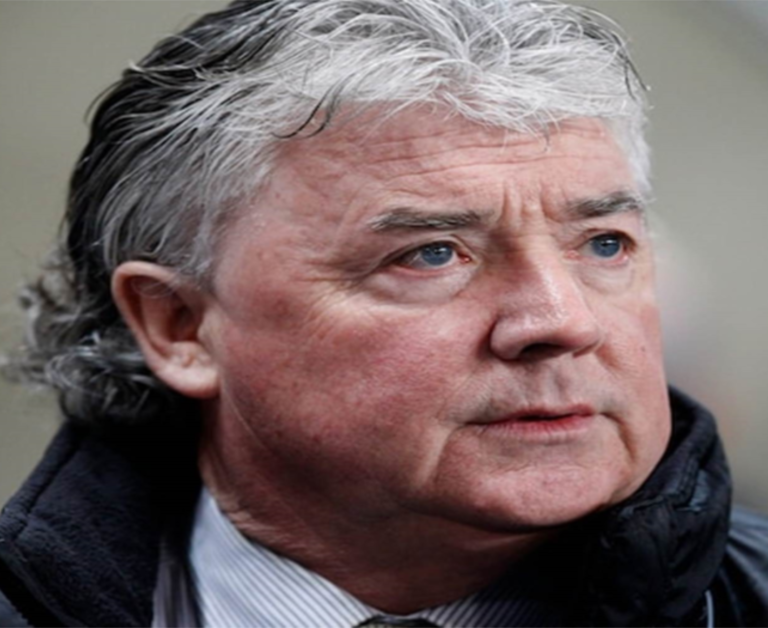
JOE KINNEAR rescued an ailing Wimbledon FC — 17th when he took over from the ill-fated Peter Withe in February 1992 — and moulded the Dons into an against-the-odds respected force: three top-10 finishes in the Premier League, three cup semi-finals along with four Manager of the Month awards before his heart attack in the team dugout prior to the kick-off at Sheffield Wednesday on March 3, 1999.
The Dons won that night at Hillsborough, moved to sixth, before yielding just two points from their remaining 11 games without recovering Joe to finish 16th. They were relegated from the Premier League under Egil Olsen in the following season.
Joe had 364 matches in charge of the Dons, won 130 of them for a win percentage of 35.7. He ranks among the Dons greatest managers, arguably the best given his record in the highest league. He was voted Manager of the Year by the League Managers Association (LMA) in 1993-94.
Joe Kinnear passed away aged 77 on April 7 (2024) after being diagnosed with an aggressive form of early onset vascular dementia in 2015, which required full-time care in the latter stages.
His wife, Bonnie, suspects that Kinnear’s dementia was caused by repetitive heading of the football as a defender during his 10-year playing career with Tottenham Hotspur.
Kinnear found the winning formula in his time with the Dons, unleashing their collective spirit, reviving the Crazy Gang days under Dave Bassett and putting together a resilient combative side: Earle, Jones, Fashanu, bringing in Cunningham, Leonhardsen, Gayle, Ekoku. John Hartson was signed for a record £7.5 million.
Joe Kinnear was popular with the media, he was very quotable. Leading football writer Henry Winter relates the tale that on becoming manager of Wimbledon in 1992, Kinnear faced the assembled media and addressed the team’s need for two no-nonsense midfield enforcers.
“To the excitement of those clutching pens poised over notebooks, Kinnear added that he’d already earmarked the requisite hard men. Who? Tell us who? “Reg and Ronnie Kray…”
Winter wrote: “He was naturally funny. It is why so many people instantly warmed to him. He was a character. Football has lost some of that character. How many managers now have answerphones that say: “Leave a message, but if it’s Real Madrid I’ll ring you back”? The engaging Kinnear added to life’s merriment time after time.”
Even though Kinnear performed miracles with what he had available — Wimbledon had no home ground at the time (playing at Selhurst Park), the players trained on a public park where they shared dressing rooms with a local school, and had by far the lowest budget in the top flight, he was modestly paid by Sam Hammam during his time as the Dons gaffer. His salary at one time was reportedly less than £100k a year.
The players respected him, they would play for him, he was one of them. Gerry Cox, writing in the Irish Examiner, recalls getting a call from Kinnear late one night from a London wine bar where he and the players would often hang out.
Joe Kinnear with Vinnie Jones PHOTO Getty Images
“He was with John Hartson and Vinnie Jones – the three had shared ownership of greyhounds – and he’d just sealed the deal over drinks. “Can you get it in tomorrow’s paper?” he asked.
Cox asked him to put Hartson on. “John’s gone, but what he would say is ‘I would not have signed for any other manager than Joe…”
Kinnear also had an eye for a prospect. He saw Carl Cort as a schoolboy, signed him up, and encouraged a talent eventually sold to Newcastle for £7 million. He paid Brentford £250,000 for Marcus Gayle, who was sold on to Rangers for four times that. Dean Holdsworth came for £650,000 and went to Bolton Wanderers for £3.5 million. Warren Barton, John Scales, Terry Phelan and Robbie Earle also developed under Kinnear.
Some of his team talks were explicitly blunt and straight to the point: “I want people playing for me with bottle, not anyone who shits themselves when the going gets tough,” he once said.
Joe Kinnear with George Best and Rodney Marsh PHOTO Getty Images
But he was also capable of having one-on-one chats with individuals, building their confidence. Henry Winter writes: “They respected a very good coach and a real people person who told wonderful anecdotes about his playing career, about facing George Best, not to big himself up but to make a point or often a joke. Laughter was often in the air around Kinnear.”
So it came as a monumental shock when Kinnear suffered a heart attack at the age of 52 while preparing Wimbledon for a game at Sheffield Wednesday in 1999. As he said at the time, “It was a tap on the shoulder from the Big Man. I was lucky to be at Hillsborough with its first-class first aid facilities – anywhere else and I might have died.”
He never returned to the dugout again as manager of Wimbledon and the club’s fortunes subsequently nosedived, culminating in their traumatic final day relegation the following season after 14 seasons in the top flight.
He subsequently resurfaced briefly at struggling Oxford United, then Luton Town, Nottingham Forest and his ill-fated two stints at Newcastle, as manager and then director of football.
His first press conference as caretaker manager in 2008, following the unexpected resignation of Kevin Keegan, would make sensational tabloid headlines.
Annoyed at the papers’ scepticism abut his suitability for the job, some of the stories surrounding his appointment and irked by reporters asking him how long he was contracted for, he vented his anger at the outset. He launched into a six-minute expletive-laced tirade at reporters which made lurid headlines on the back pages of papers the following day.
Kinnear’s spell on Tyneside came to an end a few months later when he had to have a cardiac bypass and by 2013 the early signs of dementia were becoming apparent to those closest to him.
Daughter Russ Doffman says her father’s decline after being diagnosed with dementia was “heart-breaking”.
“We noticed his moods were changing,” she said. “During my teenage years he was such great fun – very outgoing and positive, but then he started getting verbally aggressive. His whole personality changed and he went very quiet. He had it for 11 years. Watching him fade away was awful.”
Henry Winter wrote: “We pigeonhole people too easily. So when I think of Kinnear, I don’t think only of the 2008 rant at a Newcastle United press conference that many felt defined the man.
An hour or so after his diatribe was published in a hail of headlines and asterisks, I received a text from Kinnear. He was bruised, a bit bemused, and invited me up to do a piece.
He felt his honesty and work ethic had been questioned. He felt he deserved more appreciation for his contribution to the game, as a fine wing half/full back with a very good Tottenham Hotspur side, and then as the manager at Wimbledon, keeping them in the Premiership against all odds year after year.”
Joe Kinnear with Neal Ardley
Winter continued: “One tirade eventually led to him being belittled as somebody not in tune with the modern game. Nonsense. He was a very capable man-manager: vital in the modern game. He had to be to work, initially as a coach, with that eclectic, strong-willed Crazy Gang. Vinnie Jones and John Fashanu required different handling.
“Kinnear brought the best out of the Dons where his predecessor, Peter Withe, had failed.. So we should celebrate a football man, one of life’s characters, as at home on the training field as going to a party with Vinnie Jones.
“We should admire how he supported his peers. We should also raise again questions regarding the scourge of dementia in football. RIP Joe.”
The LMA posted a moving tribute to Kinnear the day after his death.
“Joe was such a gifted leader, whose technical knowledge, charisma and his ability to build a culture undoubtedly contributed to his many achievements as a manager,” LMA chairman Howard Wilkinson.
MIKE TALIADOROS — the Voice of WDON and who has been at every home and away competitive domestic first team Dons game since May 1989 — reflects on Joe Kinnear’s time at Wimbledon FC
Looking back at Joe’s seven years at the helm there are, of course, many highlights and achievements which Dons fans of that era will instantly recall, but underpinning everything was the stability and reinvigoration he brought about from the very moment he took charge.
Off the field the club was struggling to find its feet and identity having left Plough Lane the previous May, which may have been easier for the fans to digest and adapt to had the team being pulling up trees, but this was far from the case.
The appointment of Peter Withe in October 1991, something Sam Hammam later admitted was a major error, yielded just one win in 17 matches. In fact, Withe was just a Graeme Sharp penalty miss for Oldham away from a totally winless reign before the axe inevitably fell with the total disarray personified by a fan running on to the field at Selhurst to confront him face-to-face after the ignominious FA Cup 3rd round exit to Bristol City.
PHOTO Getty Images
Enter Joseph Patrick Kinnear. And having been previously overlooked for Withe, it was almost as if he was determined to make up for that lost time as much as prove Hammam wrong.
It was just the tonic the Dons needed and an immediate seven-match unbeaten run yielded 15 points to pave the way for a safe mid-table transition into the newly-established Premier League.
How pivotal this proved, particularly when one remembers the fate of two of the three relegated clubs in that 1991/92 season. Notts County have never made it back to the top flight, meanwhile Luton, via their various well-documented trials and tribulations, took 31 years to return there.
Joe Kinnear the LMA Manager of the Season 1993-94 with Alex Ferguson
Ultimately, however (and almost as if to underline his massive influence and importance), as much as Joe’s arrival not only preserved but enhanced the Dons top-flight existence with a string of top-10 finishes and magnificent Cup exploits, his sudden and untimely departure from the dugout could certainly be argued to have significantly contributed to its ending.
The Dons team did incredibly well to show the resilience to win at Sheffield Wednesday on the night Joe fell ill, but under the ensuing joint-caretaker managerial team, just two points were acquired from the remaining 33 available, precipitating a nosedive from sixth place on that fateful night at Hillsborough to a 16th place finish.
And then following the appointment of Egil Olsen (something that made Peter Withe’s arrival look a masterstroke by comparison!) Dons bowed out of the top flight after 14 years with something of a whimper, with just seven wins from 38 games and an eye-watering 33 points dropped from winning positions. And the rest, as they say, is history…
It wasn’t all plain sailing of course (such as when he seemed at odds with Dons fans over the proposed Dublin relocation) but for the way he breathed new life into a team in exile that those same supporters could nevertheless continue to be truly proud of, he will never be forgotten…. when those Irish eyes were smiling, so were we. RIP Joe… and thank you.
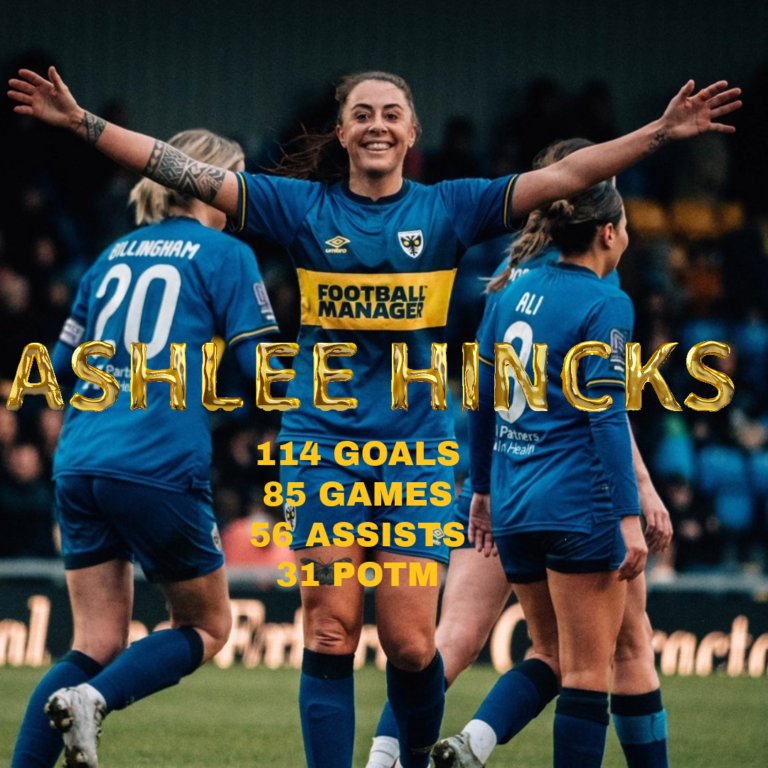
ASHLEE HINCKS has had a phenomenal impact with the AFC Wimbledon Women’s team, registering over a century of goals in just three seasons! It’s a compelling story of success and heartbreak as Ashlee explains in this WDSA interview.
(i) For those who have come in late to the Ashlee Hincks story, can you give a run down of where you began your junior football, the clubs you have played for, talk about representing England at all youth levels and the high points of your club career?
Ashlee Hincks: I started my career at Charlton Athletic where I made my first team debut at 17, I won a League Cup final and played in an FA Cup final with them. I moved on and played a few seasons with Watford. After I had a spell at Chelsea and played in the first-ever WSL game. I again reached another FA cup final (unfortunately another loss, this time on penalties to Birmingham City). I had a season out on Iceland which was an amazing experience, when I returned I played for Millwall for 3.5 seasons in the Championship and captained them to a 19-game unbeaten run (which for the Championship is very very rare!). After Millwall I switched to Crystal Palace for three seasons then on to AFC Wimbledon. I also represented England at all youth levels.
(ii) In the summer of 2021 you joined AFC Wimbledon from Crystal Palace. What were the factors that influenced your decision to join the Dons?
Ashlee: I was ready for a new challenge. I wanted to drop a league (or in this case two) to try and help a team progress through the leagues. Wimbledon offered me a great opportunity to do that with big real foundations. The chance to play at the brand new Plough Lane was also a huge draw…
(iii) You have made a phenomenal impact as the figurehead of the women’s team, racking up an extraordinary number of goals (along with 28 player of the match awards!). You have a happy knack of getting in behind backlines for 1 v 1s and regularly turn up in the right place to get on the end of crosses. Were those attributes always in your game (instinctive) or have you learned through specific coaching /training?
Ashlee: I think this comes along with my many years of experience playing at the highest levels — this provides me with a level of instinct of being in the right place at the right time. Having played the game for as many years as I have I feel like I am able to put myself in positions to receive the ball and score all types of goals that I do.
(iv) Another aspect of your game is that you take free kicks and corners – unusual for a number 9 – and have probably provided two dozen assists off the back of them. Were you always the designated taker at your previous clubs and would you secretly rather be in the box getting on the end of someone else’s corners?
Ashlee: One of my biggest attributes has always been my dead ball deliveries and I have always been a taker of them ever since I was little. I enjoy assisting and setting up as many goals as I score — I think I’m more of an assist delivering than waiting for them in the box.
(v) Why do you think you score so many “worldie contenders”? Do you have a particular favourite goal for the Dons (and is it on You Tube for us to link to}?
Ashlee: I always get asked this question, and I agree, I have scored some pretty nice goals since being at AFC Wimbledon, however, again I think it comes down to my ability when striking the ball, and an instinct of when to catch out the opposition keepers. I don’t have a favourite goal I can think of, however, my 100 goals have been put on YouTube by the club.
(vi) What have you had to change in your game over time to continue to succeed? As a senior player what elements of your approach to the game would you ideally like to see rubbing off on the younger players in the group so that they can push on and fulfill their potential?
Ashlee: Naturally, I don’t recover as quickly as I used to and seem to pick up more niggles and random injuries I have never had to deal with but my approach to each game remains the same. In terms of it rubbing off on others, I think consistency is the main thing, in order to be successful in anything you need to be able to perform consistently in each game and my advice would be working on that and ways to ensure you are able to maintain it.
(vii) It hasn’t always been smooth sailing for you on the football pitch. You have had some serious injuries. Can you detail the setbacks that you needed to overcome to get back on the pitch?
Ashlee: In 2019 while playing for Crystal Palace I unfortunately went through the injury no footballer wants to ever go through. I ruptured my ACL, along with a grade three strain MCL and completely tore my meniscus. This meant a lengthy period on the sidelines. I had surgery in February 2020 I made my comeback almost a year later in January 2021. Having done this injury after turning 30 I think I was written off in a lot of ways and no one expected me to come back as strongly as I did. It is one of the hardest things I’ve ever had to do and to this day I am very proud of myself for overcoming it and coming back as quickly and as strongly as I did. I was also unfortunate to tear my Achilles last season which sidelined me for eight weeks. It’s something I am still having to continually manage this season.
(viii) You recently became the 11th Dons player to reach a century of goals and hold the impressive stat of scoring 110 goals in 80 appearances with 54 assists! How did it make you feel when the club made a special presentation to you on the pitch at a recent mens first team game marking that fantastic achievement?.
Ashlee: It was an incredible day for me and my family, and amazing to be acknowledged by the club in the way I have been — it’s an incredible achievement and again something of which I am very proud.
(ix) You juggle playing with a full-time job outside of football. You have said you would never go full-time as a player. Can you explain your thoughts behind that throughout your playing career?
Ashlee: The only time I have been full-time was for the time I spent in Iceland. Other than that, yes, I have always worked full-time around my football. It’s great to see the womens game where it now gives women/girls the option to go full-time. Unfortunately, when I was growing up the financial aspect of the game was not there, which meant you needed to work alongside with playing football. As my professional career (a Senior Account Manager within a payroll solution company) took off the reality was I was better off financially to work full-time and play semi-professional.
(x) You’re now 35. What does the football future hold for you and have you any ambitions of coaching or going into management after retiring from playing?
Ashlee: I don’t yet know my future path. I know I want to remain a part of women’s football but as yet unsure at what capacity that will take. [and after re-signing following the final game of the season] Signing for another year was a no brainer for me. Since signing for AFC Wimbledon back in June 2021 I have felt completely at home. I love everything about the Club and every time I step out onto the pitch in a Wimbledon shirt I feel very proud. Sealing promotion this season is exactly what the Club deserved and I’m excited to put pen to paper once more to continue our success and growth. Here’s to 2024/2025!
(xi) Finally, this has been a tremendous season for the AFC Wimbledon women under coach Kevin Foster. How do you feel about the achievement of clinching the promotion and what it means for the team and the club?
Ashlee: It feels incredible to finally seal promotion, the aim and ambition since I signed with the Dons. It is amazing to finally get over the line and call ourselves champions! Unfortunately, I have been carrying an injury and missed four games which is frustrating. [Ashlee played in the final game against Actonians. She made a goal assist and converted a penalty into the roof of the net for the winner!]
Womens team manager Kevin Foster “Ashlee’s goal scoring record speaks for itself, but what people don’t see from the outside is a true leader within the group. Her experience of playing at the highest level will help us hugely in the new challenges of tier three.”
Sophia Axelsson, General Manager: “The experience of Ashlee and Ellie Dorey in the higher leagues will be hugely important for our continued success in the FA Women’s National League Southern Premier Division. We’ll come up against teams such as Ipswich Town, Oxford United and Plymouth Argyle. We are so lucky to have them – bring on 2024/25!”
In Academy Manager Michael Hamilton’s 2023 review he listed England call-ups for five academy graduates — Spike Brits (Under-17s), Michael Golding and Archie Stevens (U18s), Joe Whitworth (U20s) and Matthew Cox (U21s).
I was delighted and proud even though I’d never seen any of them play and I probably won’t for some time since they are all now at other clubs. I will be tracking their careers with keen interest.
It’s tremendous that the fans-owned club is producing so many quality players but sad too that the very best of them seem to be scooped up before they play in our first team.
Jack Rudoni
I’m sure that most of us would prefer doing it the Jack Rudoni way, where he played for a couple of seasons before leaving for a reported fee of £800,000. And witnessing Ayoub Assal’s talent before Qatari club Al-Wakrah triggered a release clause in his contract with a then record-club fee of £1million-plus.
Or like Ryan Sweeney, who played a dozen games then went to Stoke for £200,000. These figures are public knowledge, but the fees I quote throughout are based on good sources.
This made me ponder what the Dons got back in transfer fees on their investment in those five Academy-reared starlets, how much the Club might eventually make out of it and what would trigger those payments? So I did some foraging around and this is what I uncovered.
For the transfer of an academy product apparently the fee depends on the age of the player. Up to the age of 14 the Club can’t refuse to release a player to another club. Also, if we can’t agree terms then compensation is set according to a Premier League matrix which dictates fixed rates.
A relevant recent example is Michael Golding, one of the five who were called up by England. He left the Dons in 2018, aged 12, so his transfer would have been covered by the matrix. If he had been at the Club from age eight he’d have completed three and a half years by the time of his transfer. Under the matrix that would have entitled our club to just…. £10,500.
The matrix also specifies that in the absence of an agreement between the clubs the default position is that every appearance in the PL earns Wimbledon £15,000 up to a maximum of 100 appearances, that cashes out at £1.5m.
At the time of Michael Golding’s transfer, the requirements specified that if the player is sold then the club only get five per cent (minus what the Club had already been paid). Although that is all the Dons would be entitled to, I’m reliably told some of the wealthier clubs do come to the party and in many cases an extra payment has been negotiated for a first professional contract and another one for a first team debut.
Michael Golding
So when young Golding made his first team debut with Chelsea late last year (2023) he will have triggered another payment — sources tell me that the payment contributed a major chunk of Joe Lewis’s fee!
Once a player turns 14 and has been offered a scholarship, according to my sources, then other clubs just can’t whisk him away; the matrix in this case doesn’t apply. So in those circumstances the Club negotiate a deal and I understand that the club now ask for an extra payment for each stage of a player’s development.
This means Wimbledon could get a fee when that player earns his first professional contract, then his first senior appearance and perhaps even for an international debut. Also, a 20 per cent sell-on clause is pretty much standard in these negotiations.
For older lads I understand the Club have negotiated substantial fees. It’s public knowledge fees of £100,000 were agreed for Daniel Agyei and Will Mannion while club sources inform me that Josef Bursik (Stoke City) and Matthew Cox (Brentford) both went for £250,000.
Spike Brits
Last June the club announced a club record academy fee with Manchester City for goalkeeper Spike Brits — would you believe it was between £350,000 and £400,000!
Sadly, Agyei and Mannion were released by their clubs for free so Wimbledon didn’t get any sell-ons for them but I’m told we did get one for Bursik, where Club Brugge are reported to have paid Stoke £750,000. If true, the Dons would have banked a further £100,000 windfall.
For a club like ours, the hope is that one of our Academy graduates will be sold for a motza fee and the Dons will pocket a few million through the sell on deal.
There is speculation surrounding current first teamers Jack Currie and Hus Biler being targets for rival clubs, while Jack Rudoni is doing very well at Huddersfield and may well move on at some stage.
If so, I take it that the Club will get 20 per cent of the fee minus what we’ve already been paid by the Terriers.
While we all fervently hope to get a deal like that one involving Ollie Watkins’ transfer from Brentford to Aston Villa which netted Exeter City £4million, it appears Wimbledon are looking at getting their returns from Academy players sales over time.
Leo Castledine
For example, there’s Matthew Cox, who is currently on a season loan at Bristol Rovers and highly regarded; Joe Whitworth has already played two PL games for Crystal Palace while Michael Golding and Leo Castledine (son of ex-Don Stewart), are both at Chelsea and training (and making appearances) with the first team. I understand the club received £160k when Castledine came on as a substitute for Chelsea in their EFL Cup semi-final in late January.
All of them are said to have healthy sell-on clauses written into their transfers. Given the need to repay a large chunk of Plough Lane bonds over the next few years, such a deal would be very welcome… like you, I’ll be watching keenly what plays and pays out! — ROB SMITH
ALAN CORK is one of Wimbledon’s storied players. He holds the distinction of scoring in all four divisions, he earned a FA Cup winner’s medal. He is the Dons greatest goalscorer over 14 years. It’s a fantastic tale as Corky relives in this Q&A.
(i) Let’s go back to the start. You were one of Dario Gradi’s first signings as an 18-year-old striker on a free transfer from Derby County.in early 1978. Tommy Docherty, the Rams manager at the time, is said to have never seen you play. Can you tell us how the move came about, your feelings about leaving Derby?
Alan Cork: When Colin Murphy’s took over Derby with Dario as his assistant, I went on loan to Lincoln City, in the meantime Tommy Doc took over the reins at Derby, so I was away for five weeks and in the meantime the lad who took my place in the reserves got a few games for the first team, so when I went back Tommy Doc just phoned me up and said Dario had called him from Wimbledon and I could go there if I wanted, so I said yes, and it is true he never saw me play, many years later I saw Tom and introduced myself and I said ‘you gave me a free many years ago’, and he said ‘son, I’ve given many people frees’, and we had a lovely chat.
(ii) You scored your first goal on your sixth league appearance and went on to net a total of four times in 17 outings in your first season. You were flying with a total of 25 in your following season. How was the adjustment to life in South London on and off the pitch?
Alan: It was difficult leaving home as I had never been away so at first I found it really hard. I stayed in digs with Anne Eames, who at the time was Dario’s PR. She really helped me settle in, but I soon made some new friends and everything was good. When things go well on the pitch life is always good. I was very lucky to be involved with something that took off and I had so much fun with all the young lads who were there at the time, and all those young ones were there for a while — Downes, Gayle, Hodges, Thorn, Gannon, Wise … the list goes on.
(iii) But it wasn’t all plain sailing early on. You broke your leg in a collision with your goalkeeper Ron Green at Walsall in September 1981 and spent the next 18 months out of the game. How did you cope with the long and presumably difficult rehab before your return in April the following season?
Alan: It always annoyed me when I broke my leg because I should have scored! All I ever worried about was not scoring. If we got beat 5-1 and I scored I always thought I had done my job, so when I was sitting on my backside for a long period I struggled a little. The docs decided to put a metal plate and seven screws in my leg, and when I woke up in agony I saw Wally and Stan Bowles both pissed leaning on my bed. Believe you me they were the last two people I wanted anywhere near me!! It took longer to heal for some reason and after I kept pulling the plate apart they decided to take it out. I then went back to the surgeon who told me I may have cancer as the X-ray showed some suspicious things. So I wasn’t very happy and went straight off to hospital again. Luckily for me all it was just where the screws had come out it was emitting some cloudy stuff which they mistook for cancer cells… So after another bout of rehabilitation I made my comeback against Mansfield did okay. Dave Bassett asked me if I wanted to play in Sweden with Roy Hodgson in Orebro during the summer off-season. I jumped at the opportunity and I missed the start of the next season but, importantly, I was really fit and happy.
“We had a standard amount of money taken out of our wages for hotel damage before it had actually happened.”
(iv) There were madcap seasons under Dave Bassett and the Crazy Gang. Plenty of hi-jinks and training-ground stunts. It obviously didn’t hinder the team’s stellar achievements. What’s your take on those life and times?
Alan: We had a standard amount of money taken out of our wages for hotel damage before it had actually happened. I must admit if smart phones were around then we would have been in trouble on a lot of accounts. This really was the bonding thing that kept everyone together. Team spirit is worth a goal every game, with our free kicks which we were very good at, we seemed to be 2-0 before we kicked off such was the belief within the team.
(v) You were praised for your ‘football brain’, finishing and heading ability, among other things. Did you have a favourite striker (or strikers) to play alongside at Wimbledon, someone you felt comfortable playing with? Is there a favourite/personally satisfying goal you scored?
“The goal I have on my wall at home was the one against Sheffield United we beat them 2-1 in a pivotal late season game against our promotion rivals in Division Three in 1984. I scored with a header from a corner, but the photo had the full stand at Bramall Lane in the background.”
Alan: I played a lot with Stewart Evans and we got on really well off the field too. The goal I have on my wall at home was the one against Sheffield United we beat them 2-1 in a pivotal late season game against our promotion rivals in Division Three in 1984. I scored with a header from a corner, but the photo had the full stand at Bramall Lane in the background. My other favourite goal was in front of the famous Kop in March 1987. We beat Liverpool 2-1 at Anfield. I came on as sub and headed the winner off a corner 12 minutes from time.
“All our free kicks went through me, and Dennis Wise would always aim for me. If you ever watch our videos it’s always the same. I would spin around the back or front and Dennis or Hodgy always knew where I would be.”
(vi) A career high point must have been the FA Cup final in 1988. Plenty of tactical work/preparation by Bobby Gould and Don Howe went into the win. Tell us about your defined role in the Wembley final, and your work to pull some Liverpool defenders away from Lawrie Sanchez to enable his free header off Dennis Wise’s free kick for the ultimate winner? And you’ve said it all came after an impromptu drinking session on the eve of the final that went on until 4am.
Alan: The FA Cup was great. Just before the kick-off, Don swapped Dennis and me so I played on the left wing. It was because ‘Uncle Don’ wanted Den to look after John Barnes. It worked out well, though the goal was very annoying for me as I missed it by six inches. All our free kicks went through me, and Dennis Wise would always aim for me. If you ever watch our videos it’s always the same. I would spin around the back or front and Dennis or Hodgy always knew where I would be. I was happy with Sanchez, but, as I said, l liked to score goals and that would have been very special.
(vii) The celebrations went on for days and culminated in your testimonial game at Plough Lane and that legendary mooning by all the players on the halfway line at half-time. How did that all come about and whose idea was it?
Alan: The testimonial was a bit of a shambles as everyone was still drunk. The crowd started off the shorts thing as they chanted ‘Vinnie, Vinnie show us your arse’ … so he did and got away with it. Six of us did it too and got fined £12k, but it was well worth it! I later took my coaching badge with Wally and had 10 days drinking!
(viii) So after 14 seasons 430 appearances and a record 145 goals (and scoring in all four divisions) you sought a move and was granted a free transfer to re-unite with Harry Bassett at Sheffield United in March 1992. You said at the time it was hard to leave but “if I had more bottle and more ambition, I would have left some time ago”. Talk us through your thinking about making the big break and going elsewhere to play? You did play under three different managers in that final season, it must have been disruptive?
Alan: After 14 years of Wimbledon it was time to go. It made it easier for me as I knew half the Sheffield United team and I could stay with my parents in Derby. It was a win win for me as I only went up there to see them every now and then. West Ham had an interest a few years before but Gouldy wouldn’t let me go, which was a shame and we fell out a little bit over it, but we soon made up.
(ix) Teammate Kevin Gage says you turned into a cult hero at Sheffield United with your flowing beard and was “surprisingly effective given his age and lack of pace/agility(!)” Your memories of playing under Bassett again and with some of your old Dons teammates?
Alan: I had a great time at Sheffield and obviously the beard made me a very old looking young man! It was also great to be playing with Gagey, Wally, Hodges and Gannon again, and obviously Brian ‘Deano’ Deane, there were great times.
“Throughout football everyone tells me what a great pro Jack is. To put the money thing into perspective: when we won the FA Cup I was on £425, when Jack signed as pro for Chelsea at 16 he was on £600 … he always chuckles about that.”.
(x) Your son Jack has carved out a successful playing career with over 530 league appearances while also playing in the Olympic team and for England. You are rightly proud of his achievements. Can you talk about him compared to your football career (training attitude perhaps?) and how his money compares to what you earned at Wimbledon?
Alan: Jack has been a fantastic professional throughout his career and has been very fit… not like his father! It’s amazing really. If I would have had Jack’s ability to pass and run, and Jack had my ability to score between us we would have done very well, but as you said I’m so proud of everything he has done. Throughout football everyone tells me what a great pro Jack is. To put the money thing into perspective: when we won the FA Cup I was on £425, when Jack signed as pro for Chelsea at 16 he was on £600 … he always chuckles about that.
(xi) You’ve played with and under many characters over the years, can you give your thoughts on …. Dave Bassett, Wally Downes, Vinnie Jones, Kevin Gage, Glyn Hodges, Dennis Wise. Bobby Gould, Don Howe, Sam Hammam and John Fashanu.
“I loved Dennis Wise as a father and looked after him. He had so much talent. He could run all day and could use both feet, a great footballer and a good friend.”
Alan: Bassett was great. I had the pleasure of playing with him. He was a horrible nasty little footballer who turned into a fantastic man manager. So long as you did your job properly under him you could do anything. Wally was the youngest of the group when I joined Wimbledon. He was just coming back from an injury but was very vocal as a young man. He would have a answer for everything but even back then when he was young he had a good football mind. Hodgy was the same, a bit quieter but he possessed great vision and had a wonderful left foot that could find me anywhere on the pitch. Gagey was quieter than most, a talented footballer who had a bit of pace and good technique. Fash came in and playing for Wimbledon really made him as a footballer, He got very friendly with Vinnie and Dennis and it got a little bit of a clique with those three. Fash was good at his job, he had pace, strength and talked the talk. I’m not sure he had a good football brain as such but he played to his strengths. Vinnie came in and just got on with it. Fash taught him how to deal with the press and that’s it really. I loved Dennis Wise as a father and looked after him. He had so much talent. He could run all day and could use both feet, a great footballer and a good friend. Bobby Gould took over from Bassett and didn’t change anything. He really looked after me. Don Howe asked me to do some coaching but Sam Hammam wouldn’t let me do it. Don was the brains behind everything. He was a brilliant coach and a great person, I also got on very well with him. Sam is Sam. Everything for himself. He knew what he was doing even when he played dim, he tried to be friends with everyone and always wanted his way and normally he got it, I worked with him for a while at Cardiff City and as usual if we were winning everything was okay but when we were losing he would change things.
“We had lovely food and saw some of the old boys, We won as well so it was a long day for my little girls but it really was a fantastic day out.”
(xii) Finally, you made a well received appearance at an AFC Wimbledon home game as guest of honour at Plough Lane this season. What were your impressions of the new ground and the set-up, just up the road from where you made your name, and your thoughts on the club’s progress?
Alan: Mick Pugh had been nagging me to go to a AFC Wimbledon game again. I told him I would come if I could bring my grandkids on the pitch at half-time, and also bring my wife and daughter. So he agreed and we had such a great time. We saw the club museum and I worked all the hospitality rooms. We had lovely food and saw some of the old boys, We won as well so it was a long day for my little girls but it really was a fantastic day out. The new ground is great and it has the potential to get bigger when the Dons get promoted, so l’m looking forward to that.
KEVIN GAGE TRIBUTE..
“Alan Cork. Alan Cork. Alan Alan Cork.
He’s got no hair, but we don’t care,
Alan Alan Cork “
As future cult heroes go, Alan Cork at Sheffield United was an unlikely candidate when he arrived at Bramall Lane in early 1992 as an ageing 33 year old, balding, slow, past-his-prime striker! And before you think I’m being a bit harsh using those descriptive words, I can assure you that my ex-teammate ‘Corky’ would agree with every one!
The Blades already had some highly talented, athletic centre forwards with the likes of Brian Deane, Adrian Littlejohn and others competing for a place, but Dave Bassett obviously knew exactly what he was getting and felt his experience could rub off and help the others. As usual, as in most areas of management, ‘Harry’ was proved right!
Because Corky fitted in immediately. He knew lots of us ex-Superdon Blades and he appeared a far more relaxed character from the often moody, self-depreciating, sometimes grumpy moaner I knew at Wimbledon.
I reconnected with him straight away and we often roomed together on away trips and had a lot of laughs remembering ‘Crazy Gang’ days and getting up to some new mischief! On the pitch, his WFC record speaks for itself, but off it are some wonderful memories of escapades we had with me as a young 19/20 year old whippersnapper spending far too much time at his pub The Kiwi in Walton-on-Thames High Street… along with a few of the other usual suspects of the time!
At Sheffield United, an older, wiser Alan Cork used his vast experience to unsettle defenders, gently ‘nudge’ them at the right times, find the right positions to be in and more often than not win important headers and glancing ‘flick-ons’ at set pieces and the like. He knew the areas Dave Bassett teams played the ball into, and he was usually in the right place at the right time. He didn’t need pace, (what you’ve never had you never miss!), but speed of thought and his striker’s instinct made the difference.
His most famous goal for Sheffield United was in the FA Cup semi-final at Wembley v Sheff Wednesday, as he miss-hit a scuffed shot past Chris Woods to equalize at 1-1. He also looked the most unlikely Premier League striker you ever saw with about 14 weeks worth of scruffy black beard after he’d vowed back in January to not shave off until we were knocked out ! It’s the iconic image of him that Blades fans of that era associate with and he’s fondly remembered for it.
So Corky…or ‘The Bald Eagle’ as he was sometimes called (shortened to just ‘Beagle’ by his team mates), thanks for the memories pal. We had a blast!
[The Alan Cork Interview was first published in the February-March 2024 issue of the Wombles Downunder fanzine. Details on how you can subscribe to Wombles Downunder.]
(i) You played your early football with the Wimbledon youth teams. Can you tell us about that, where you played (position and home ground), any special memories, and did it have a lasting influence on you in your football life?
Alf: My serious football life began when I was 13, playing for school, district and county. I was offered a football scholarship at Millfield, an independent school in Somerset, which was known as the leading sports school in Europe. At 14 I played for their first X1 under-18 team. Unfortunately, at 16 my mother died and I was obliged to return to the family home in Wimbledon. I joined Wimbledon and played in their youth team and in some pre-season reserve matches. We trained at Plough Lane. I was a number 11. Football was always my passion to the detriment of my school work. My first bit of advice: Learning is the best investment a young person can make.
(ii) I understand you have lived in Wimbledon for most of your life. Do you have a special bond with the area?
Alf: I still live in Wimbledon and I am now involved with helping AFC Wimbledon and their Academy. It is very special for me. Since leaving the club my career as taken me to 27 countries. I have been lucky enough to have worked as a coaching educator at 17 federations, including France, England and Japan as well as over 50 clubs, such as Bayern Munich, Real Madrid and Arsenal. Coming back to Wimbledon towards the end of my career is, I think, an interesting story. My playing career, unfortunately. ended after four knee operations by the time I was 18. I still wanted to stay in football and early on I took my FA preliminary badge. Eventually, I went to the USA, tried to play again but it wasn’t possible. In 1976 I married an American and soon after created along with two American friends, the Lake Placid (New York) Soccer Camp. We started with 26 kids .. fast forward 40 years and now it’s over 25,000 boys and girls who have been through that camp. Mostly proud that about 40 per cent were girls. I am a big fan of women’s football.
(iii) Tell us about how you became involved with Coerver Coaching, how you met up with Chelsea wing wizard Charlie Cooke to be the co-founders (is there a friendship with Charlie that’s behind this? – any background to it) ?
Wiel Coerver, Alf Galustian and Charlie Cooke
Alf: In 1984, Charlie Cooke, the great Chelsea legend, who was living in the USA and was football manager at Nike, discussed with me an involvement in soccer in the USA. Charlie and I then decided to begin our own soccer schools. We had similar ideas about how football should be played and coached. Fortunately. in 1984 at a soccer convention in Philadelphia we met, by chance, Dutch coach Wiel Coerver. After conversations with Wiel, Charlie and I were convinced by Wiel’s philosophy about football, which basically was that in the formative years 8-16, the focus should be more on individual not team development. Coincidentally, six months later I was doing my full coaching license at Lilleshall in England and Bobby Robson, who was the national team coach at the time, invited Wiel to Lilleshall. The next three weeks I spent almost all my time absorbing everything that Wiel said.
(iv) What were your initial aims with Coerver Coaching, how and why were you influenced by the football thinking of Wiel Coerver?
Alf: I called Charlie and told him I thought we had after all this time found a philosophy that we could build our coaching programs around. Wiel had a job in Dubai so he did not want to join our venture, so we bought the rights to the Coerver name, registered and trademarked it. Charlie and I founded Coerver Coaching in 1984. Our first task was to devise a curriculum and method. Since then we have built perhaps the largest skills curriculums for young footballers throughout the world. Currently, probably every FA and all the top professional clubs use some part of our work in some way.
(v) What is your basic ethos about football coaching, what are the pillars of your thinking on how to develop young players?
Alf Galustian passing on his years of coaching experience to the Bayern Munich youth team
Alf: Coerver Coaching, in my opinion, is indispensable to effectively play the future game. I say that because I believe that the future game will require good levels of ball possession to control the game and I believe between the ages of 6-16 Coerver is the ABC that can make that possible.
(vi) You have had phenomenal global success with Coerver Coaching, working as a coach instructor with 17 National Federations and 50 top professional clubs. What gave you the most pleasure/personal satisfaction out of that?
Alf: Of course. I may be biased, but the fact that we have been acknowledged by some of the great clubs, coaches and FIFA over these 40 years, I believe gives Coerver Coaching the credibility to make the statement that I believe is essential in a young player’s football education. Working with Gerard Houllier and Aime Jacquet in coaches education was a highlight. In the early days working at Manchester City was a highlight as was many years at Arsenal, but there are so many great clubs I’ve had a chance to work at that it’s difficult to choose.
(vii) FIFA gave you an award in 2014 for 40 years contribution to the development of the game around the world. How did that make you feel reflecting on your life’s work?
Gerard Houllier and Alf
Alf: Of course, I have many coaches who I have worked with over the years. For example, my closest friend Gerard Houllier, who sadly passed two years ago and who I miss every day. brought me to work with the French FA in 1993 and our working and personal relationship lasted both with the French Federation but also at Liverpool and Olympique Lyonnais. Gérard is on record as saying he believes Coerver was an essential part of France’s global football successes in all age groups. Another person, who I admire greatly and am close to, is Arsene Wenger and, of course. Sir Alex Ferguson. There are too many people to mention, I have been more than lucky to have learnt so much from them and many others. And what also may interest your Australian readers is that I was also very fortunate to work for the Australian Federation for three years under German Han Berger, the technical director. I was the instructor to a group of ex-Australian international players that Han wanted to fast track so they could pass on their valuable experience and talents. It was a great idea. In Australia my very good friend Jason Lancsar, who played Futsal for Australia, is now the Director of Coerver Coaching in Australia. He has developed a fantastic national program, which I recommend to all Australian parents and coaches.
Alf with Arsene Wenger
(viii) AFC Wimbledon announced last February that you would become ‘Technical Consultant’. to its Academy under Michael Hamilton. What is your role with that, how does it work. Give an example of what input you might give to the Academy?
Alf Galustian with Michael Hamilton
Alf: I am happy that I am now able to help Michael Hamilton, the AFCW Academy manager. Michael is a talented young coach and has some great ideas about how to help the club develop. Each month either online or live, I work with the coaches at the Club, sharing some of my experiences and ideas. I am a big AFC Wimbledon fan — of course!
(ix)Finally, Alf, there is considerable international travel involved in all this.Is there an end in sight for you and Coerver Coaching, what’s the future?
Alf: The future …well, whether good or bad news, I’m not going to retire as long as I’m useful .. there is still so much for me to learn.
“Meeting Alf was a game changer for me and our Academy” Mark Robinson
I was first introduced to Alf Galustian over 15 years ago by Nigel Higgs. We had real common beliefs that a player’s technical skill-set has a huge impact on their decision-making. At the time I was making up my own technical sessions (both unopposed and opposed) to improve players technique for certain game situations. Meeting Alf was a game changer for me and our Academy. He introduced me to the great work they do at Coerver Coaching and at the same time agreed to give up his time in his busy schedule to come in up to four times a season to put on sessions for our Under-18s. His special way of linking skills and technique to the game opened my eyes further to a way of coaching I believed in. I used many of Alf’s drills within our curriculum and adapted drills of my own to make them more effective. Our belief in developing two-footed players further benefitted from the Coerver coaching style. I am very proud to say Alf and I have become great friends since that first meeting. He has introduced me to some great people with great knowledge and we have enjoyed hours upon hours of player and coaching development chats.
Mark Robinson
[The Alf Galustian Interview was first published in the December-January 2023/24 issue of the Wombles Downunder fanzine. Details on how you can subscribe to Wombles Downunder.]



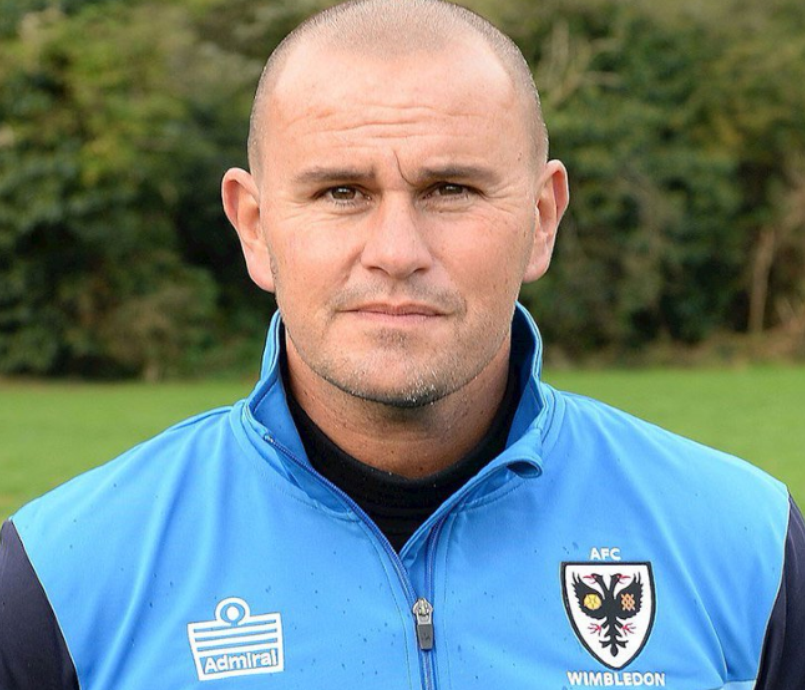


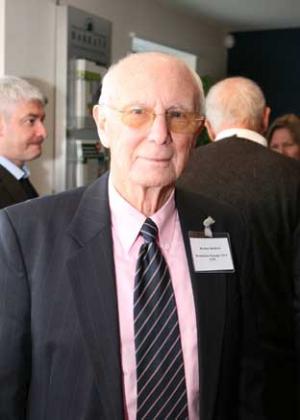
 The Batsford Boys—those club legends of non-league Wimbledon who defied the odds at Elland Road by taking the mighty Leeds United to a FA Cup replay in 1975 only to go out 1-0 to a Dave Bassett own goal before 45,000 at Selhurst Park. There they were on stage at Plough Lane receiving their deserved accolades from Dons supporters.